
Last updated November 24, 2026
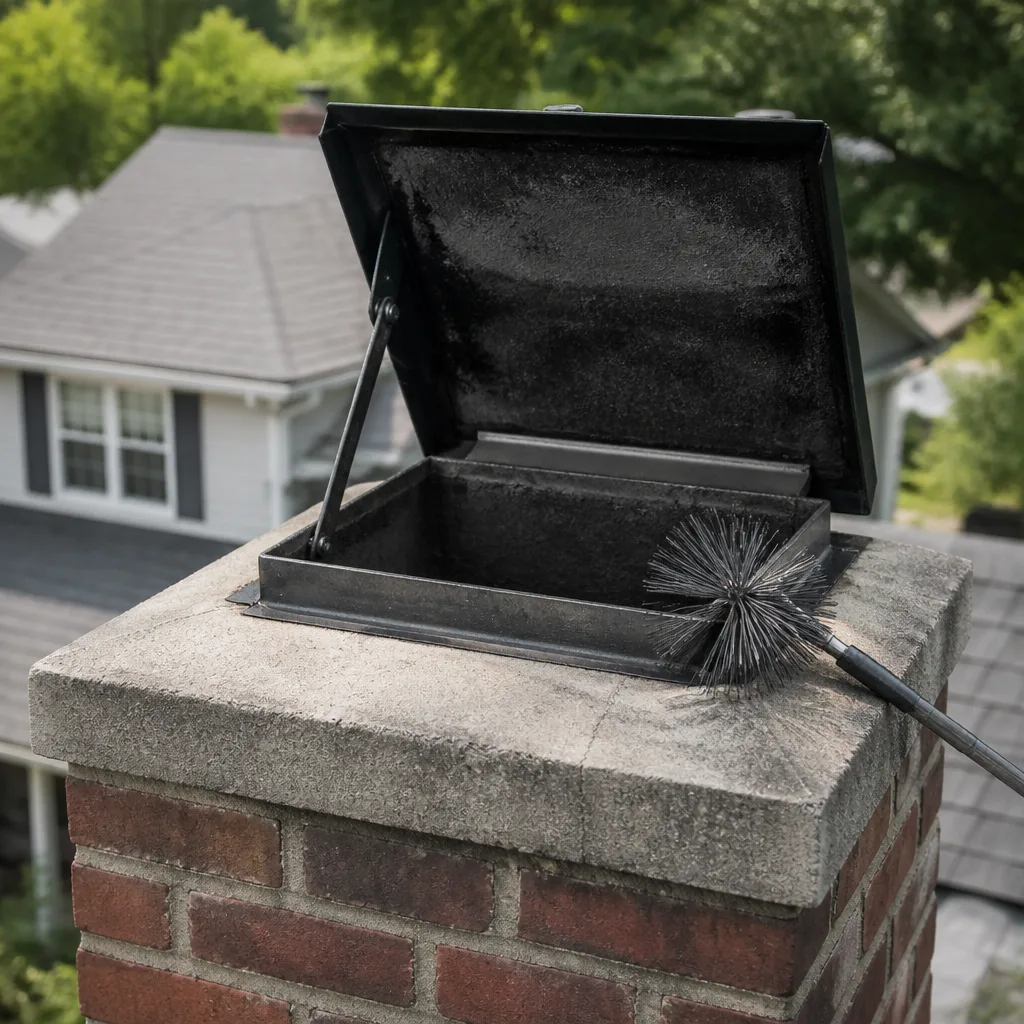 Sweep & inspection
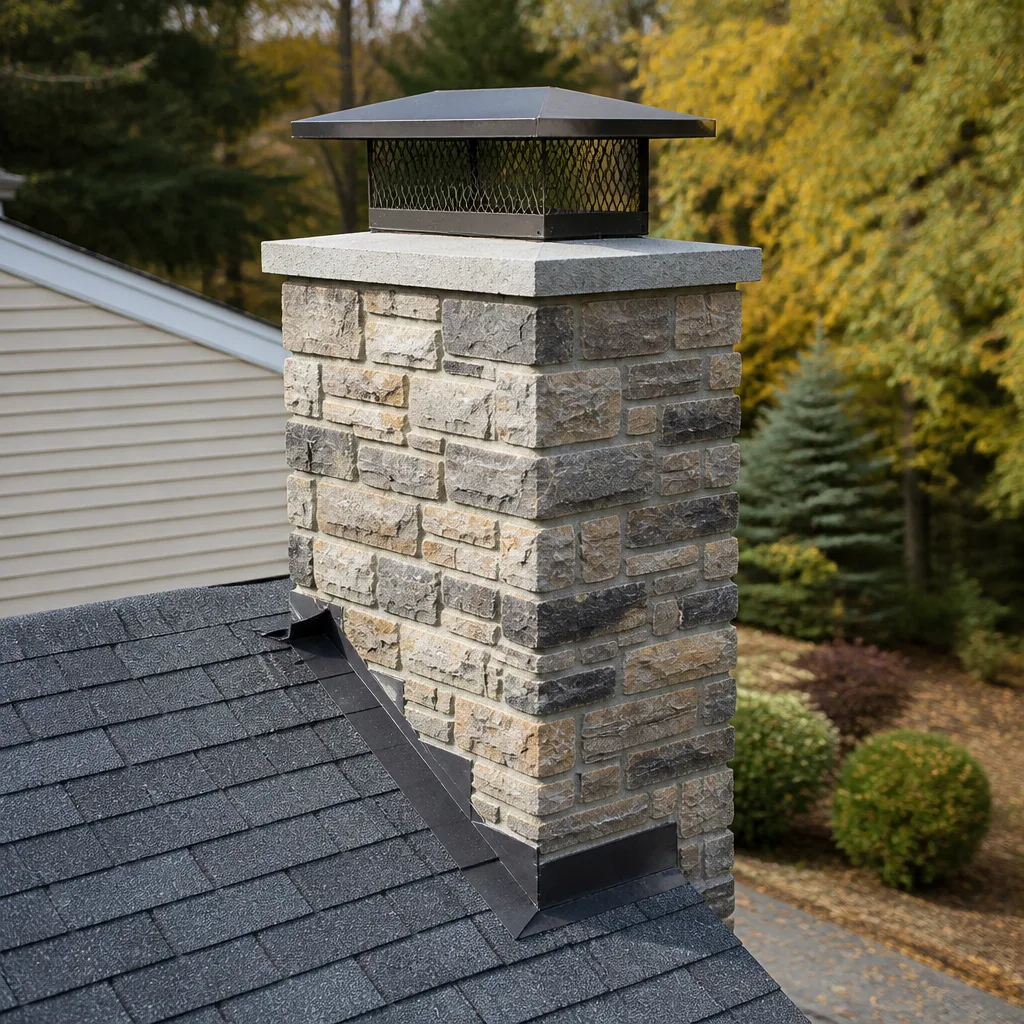 Caps & crowns
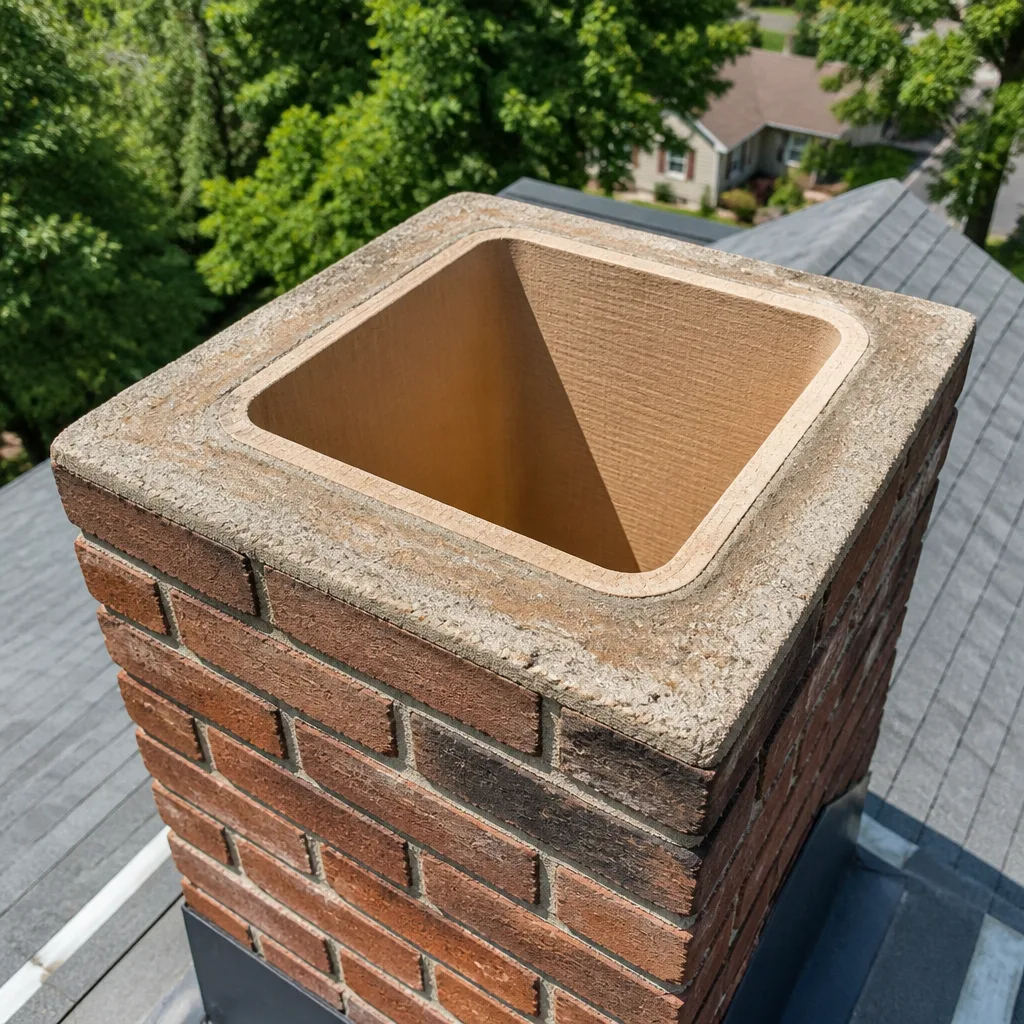 Flue relining
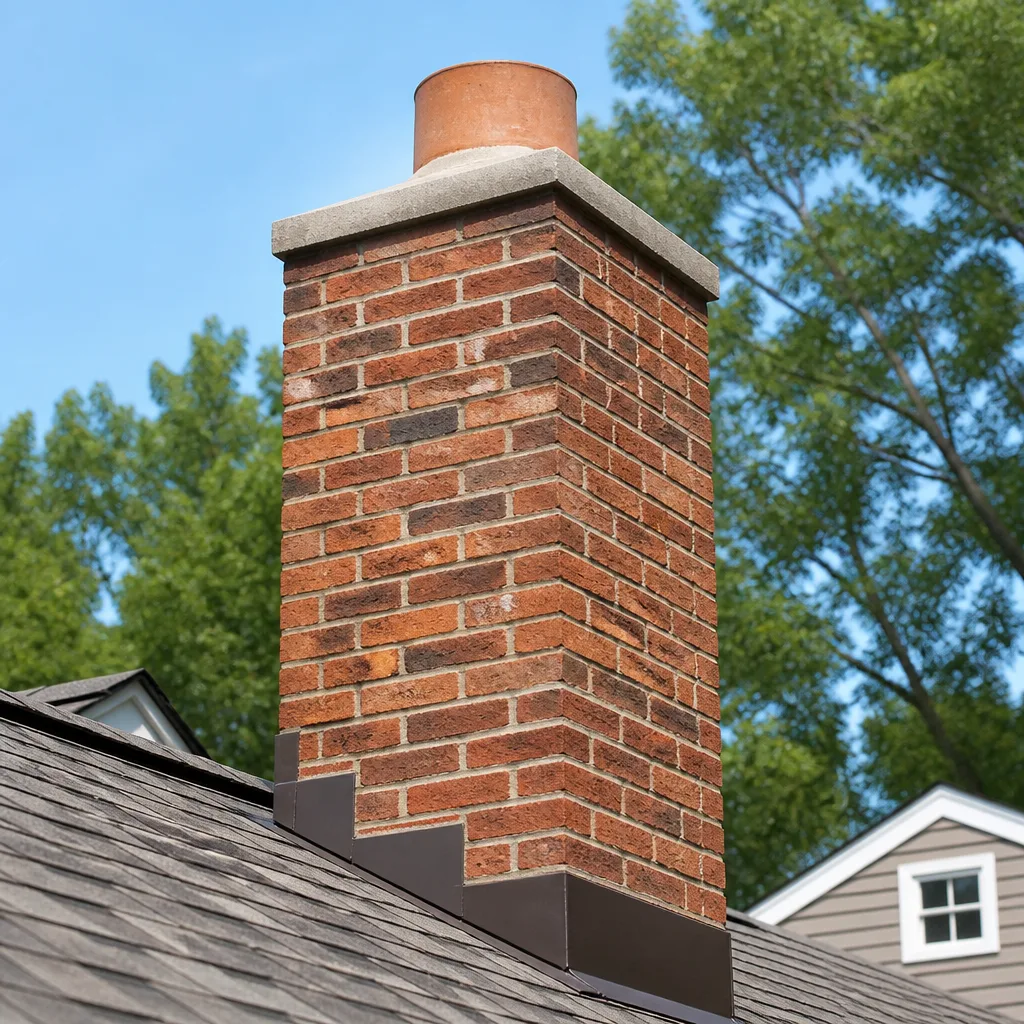 Masonry repair
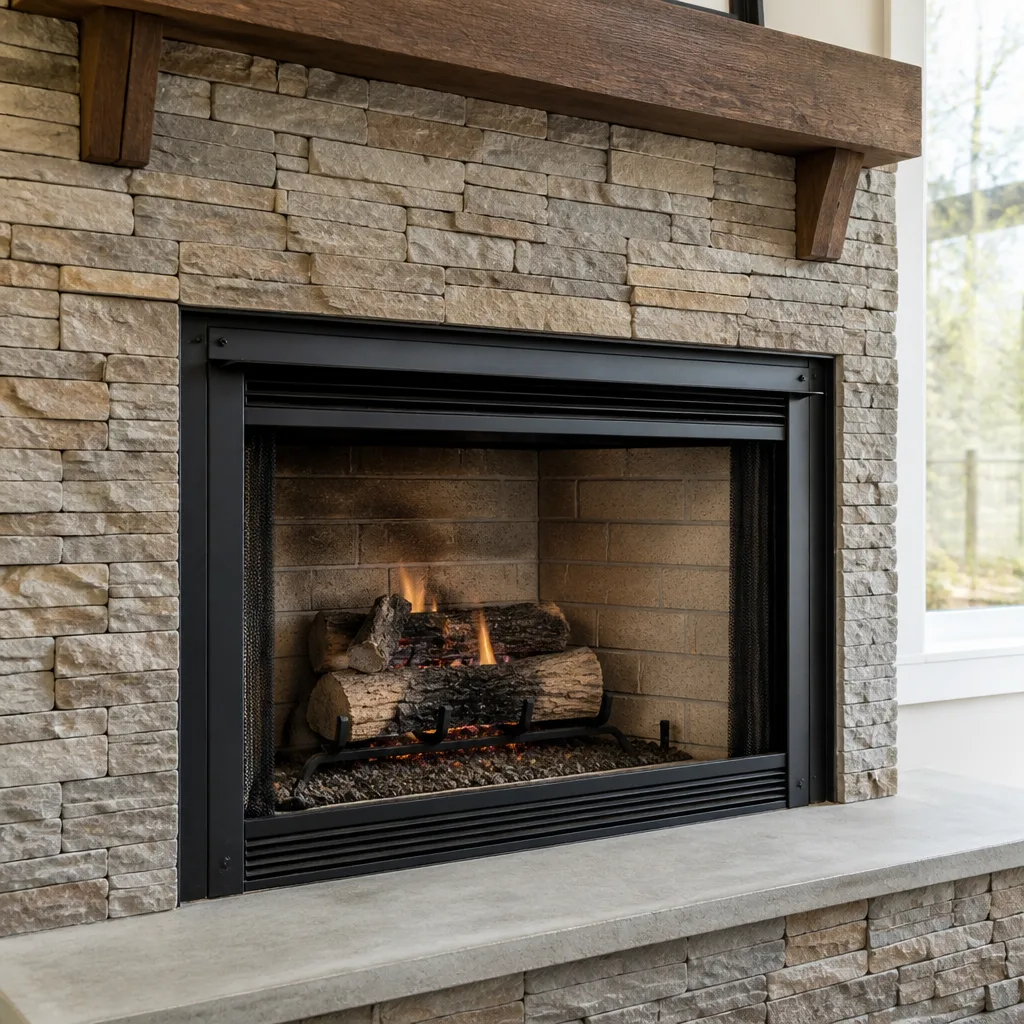 Gas fireplace service
Level 1 sweep and inspection to the NFPA 211 annual standard - flue, crown, cap, and flashing checked and photographed
Chimney sweep logs do not sweep chimneys. They loosen some creosote - which then falls where a brush and vacuum still have to collect it.
DIY vs Professional Chimney Cleaning: The Clearfield Homeowner’s Decision Guide
Consumer chimney brush kits are designed to sell to homeowners, not to meet NFPA 211 cleaning standards. The distinction matters the same way a home blood pressure cuff and a clinical cardiac workup are both called “checking your heart” – one gives you a number, the other tells you what the number means. A brush on a rod can knock loose soot off the flue walls. It cannot tell you what stage of creosote is glazed onto those walls, whether a clay tile has cracked behind the soot, or whether the liner you’re trusting your family’s air to is still intact. This guide draws an honest, technically grounded line between what a careful Clearfield homeowner can legitimately handle and what genuinely requires a trained technician with the right equipment. You’ll learn what a kit physically cannot do, which tasks you can safely own, and how to know which situation you’re actually in.
Quick Answer
DIY chimney cleaning is responsible only within a narrow scope: ash removal from the firebox, a visual damper check, and inspecting the exterior cap from the ground. A full flue cleaning that meets professional standards requires rotary equipment, a flue camera, and a trained eye to assess creosote stage and liner condition – none of which a consumer brush kit provides. If your flue hasn’t been professionally inspected, or you burn wood regularly, the DIY route creates false confidence rather than clean results. Call (877) 820-8427 for a free estimate on a professional sweep in Clearfield.
Styles & brands we work with
- Sweep & inspection
- Caps & crowns
- Flue relining
- Masonry repair
- Gas fireplace service
Table of Contents
- What a DIY Chimney Cleaning Kit Actually Does
- The Rotary vs Straight-Rod Gap: What Gets Left Behind
- Tasks a Confident Homeowner Can Legitimately Handle
- Why Liner Condition Needs a Camera, Not a Flashlight
- Real Cost Comparison: DIY Kit vs Professional Sweep
- How Clearfield’s Climate and Burning Season Change the Math
- When DIY Is Actually the Right Call
- When DIY Creates False Confidence
What a DIY Chimney Cleaning Kit Actually Does
A consumer chimney kit is a set of fiber or poly brushes on flexible rods, sized to the flue, designed to be pushed up from the firebox or down from the roof. That’s the whole system. It works on contact – the bristles scrape the flue walls they can reach, and gravity pulls loose soot down into the firebox for you to vacuum out.
For a lightly used flue with dry, powdery soot, that’s not nothing. A homeowner who sweeps once a season on a fireplace that sees a few fires a month can keep the bulk of the soot load down. Where the kit runs out of answers is at the edges and offsets. The brush follows the rod, and the rod follows the straightest path it can. The moment your flue has a slight offset, a smoke chamber transition, or a damper frame that narrows the opening, the brush drags past instead of scrubbing.
What a kit does not include matters as much as what it does:
- No rotary head, so no mechanical scrubbing of glazed or tar-like deposits
- No flue camera, so no view of tile joints, cracks or gaps
- No creosote-stage assessment, which is what actually determines your fire risk
- No documentation, so nothing to hand a buyer, insurer or future technician
We work with professional-grade equipment and the same materials chimney engineers specify – HeatShield, Gelco, Olympia Chimney, Famco – because the tools and the materials have to match the job. A kit built to sell at a home center and a rotary system built for a trade aren’t the same class of tool, and they don’t produce the same result.
The Rotary vs Straight-Rod Gap: What Gets Left Behind
A rotary cleaning system spins a weighted whip or chain head against the flue walls at speed. That’s the difference. A straight-rod brush relies on the force of your arm and the stiffness of fiber; a rotary head uses centrifugal force to press the cleaning element against every inch of the flue wall, including the corners where creosote collects first.
Why the gap matters is creosote stage. Creosote builds in three recognizable forms:
- Stage 1 – soot and flaky deposits. A brush handles this. It’s the easiest to remove and the least dangerous.
- Stage 2 – crusty, hardened deposits. A straight brush will skip over the hard patches. A rotary head with the right attachment breaks them up.
- Stage 3 – glazed, tar-like creosote. This is the fuel for a chimney fire. It bonds to the flue wall and a consumer brush will glide right over it without removing a meaningful amount.
Here’s the honest problem: a homeowner can’t reliably tell stage 1 from stage 3 from the firebox. Glazed creosote looks like a dark, shiny coating on the flue wall – and you can only see the flue wall if you’re at the top looking down with light, or you have a camera. The brush gives no feedback. It either comes out dirty or comes out clean, and “clean” from a straight-rod brush means the loose soot is gone, not that the danger is.
If you’re in Clearfield and you’ve been burning wood for a few seasons without a professional sweep, the odds are decent that some stage 2 deposits are sitting on the upper flue walls. That’s not a crisis – but it is the reason a professional rotary cleaning is the honest baseline before you start relying on DIY maintenance going forward. A chimney sweep clears the flue to a standard, and then you have a clean starting line.
Tasks a Confident Homeowner Can Legitimately Handle
There are real jobs around a chimney a careful homeowner can own without hesitation. The key is knowing which ones are genuinely safe and which ones just look safe.
Here’s what we’d put in the “go ahead” column:
- Firebox ash removal. Once the firebox is cold, scoop out ash and vacuum the firebox floor. This is maintenance, not repair, and it keeps the firebox floor dry and corrosion-free.
- Damper visual check. Open and close the damper by hand, look at the linkage, confirm it moves freely. A damper that sticks or doesn’t fully close is worth flagging for your next service.
- Exterior cap inspection from the ground. Binoculars from the yard. Look for a missing cap, a rusted screen, bird nests, or a crown with visible cracks. You’re observing, not climbing.
- Spark screen clearing. If the cap screen has visible soot or debris, a quick clear from the ground with a long brush is fair game – again, no ladder.
- Seasonal visual sweep of the firebox. After a burn, before you load the next fire, a flashlight pass over the firebox walls and damper frame. If you see cracks or heavy glaze, that’s your cue to call.
What we’d put in the “don’t” column: climbing the roof to sweep from the top, opening the smoke chamber, reaching into the flue with your arm, or trying to assess liner condition by looking up from the firebox with a flashlight. The last one is the one that gets homeowners in trouble – it feels like an inspection and it isn’t. We cover the full system from sweep to chimney repair, and that scope is the reason we can tell you what a flashlight pass can and cannot see.
Why Liner Condition Needs a Camera, Not a Flashlight
A flue camera is a small, lighted camera on a flexible rod that runs the full length of the flue and records what it sees. A flashlight from the firebox sees the first few feet, from a bad angle, with no record. That’s not a comparison – it’s two different jobs.
Here’s what a flashlight misses that a camera catches:
- Hairline cracks in clay tile that run with the flue joint and are invisible from below
- Missing mortar at tile joints, which lets creosote and heat reach the surrounding structure
- Offsets and transitions where the tile isn’t fully seated or has shifted
- Gaps where the liner connects to the smoke chamber, which is a carbon monoxide pathway
- Creosote glaze in the upper third of the flue, exactly where a fire starts hottest
Clay tile liners crack. It’s not a defect, it’s a fact of what happens to clay when it’s exposed to hundreds of heating and cooling cycles. What matters is whether a crack is cosmetic or whether it has opened a pathway. A camera tells you which. A flashlight doesn’t – and a homeowner with a flashlight who concludes “looks fine from here” has just created a false sense of security around the one part of the system they can’t see.
This is where HeatShield comes in on the repair side. HeatShield is a non-demolition flue restoration system – it repairs damaged clay tile liners without tearing out the fireplace to get at them. A technician runs the camera, documents what’s there, and if the liner is compromised, HeatShield can restore it. Most chimney companies can’t or don’t offer that option. In Clearfield, where the clay-tile fireplace is the standard configuration in older homes, it’s a meaningful choice. Camera inspection is what makes the recommendation, not a guess.
Real Cost Comparison: DIY Kit vs Professional Sweep
A consumer kit costs less than a professional sweep up front. That’s the whole comparison most homeowners make, and it’s the wrong one – the honest comparison has to account for what the kit doesn’t do and what the documentation is worth. Here’s how the line items stack up:
- Consumer brush kit: modest one-time cost. Reusable, but sized to one flue and limited to straight-rod work.
- Rods, adapters, drop cloths, shop vac with a fine filter: usually sold separately. Fine soot will destroy a standard shop vac filter fast.
- Time per sweep: an hour or more for a homeowner doing it carefully, top to bottom, plus cleanup. Add setup and tear-down.
- Professional sweep: a per-job price set by written estimate, including rotary cleaning, camera inspection, and a photo report you keep.
- Documentation value: a photo report and written assessment are what you hand a buyer at sale, an insurer after a claim, or the next technician. A DIY sweep produces nothing but a full shop vac.
The honest accounting is this: if your flue is lightly used and already in good shape, a kit is a reasonable maintenance tool for the between-sweeps years. If your flue is unknown, or it’s been more than a couple of seasons since a professional looked at it, the DIY route is cheaper only on the receipt. The real cost of a missed liner crack or a stage 3 creosote load is orders of magnitude higher than any sweep, and the kit can’t see either one. A professional sweep with camera inspection is what turns “I think it’s fine” into “I know it’s fine.”
The written estimate sets the final price, and it’s free to get one. Call (877) 820-8427 for an exact quote on a sweep and inspection in Clearfield.
How Clearfield’s Climate and Burning Season Change the Math
Clearfield sits in the Wasatch Front valley, and the way people heat here shapes what a chimney sees. Long, cold winters mean more burning days per season than most of the country gets. That’s more creosote load per year, and it compounds. A Clearfield fireplace that sees regular fires from fall through spring builds deposits faster than the national average, which means the annual inspection cadence that works in a milder climate is too slow here.
Cold air also matters on the draft side. When the flue is cold, the first fire of the season drafts poorly until the flue warms up – and a slow-drafting fire deposits creosote more heavily than a hot, clean-burning one. Homeowners who burn steadily through the cold months and damper the fire down overnight are the ones who build stage 2 and 3 deposits fastest. That’s not a knock on how you burn; it’s just what the local pattern produces.
The valley inversion cycles add another layer. On inversion days, outdoor air quality is poor and people tend to burn more inside. More burn hours, more deposit. The practical takeaway for Clearfield homeowners: the annual sweep is the floor, not a ceiling, and if you burn heavily you’ll want a professional look before each heating season rather than after. Caps and crowns matter more here too – freeze-thaw cycles on a cracked crown let water into the masonry, and water plus freeze is what splits a crown apart. Chimney repair around a failed crown is one of the most common calls we see in Clearfield, and it’s preventable with a solid cap and crown installation.
When DIY Is Actually the Right Call
DIY chimney maintenance is the right call in a narrower set of situations than most homeowners assume – but it is genuinely the right call in these:
- Your flue was professionally swept and inspected within the last year, and the report came back clean. With a clean, verified baseline, you can maintain between professional visits.
- You burn lightly – a few fires a month, seasoned wood, no overnight dampering. Light use produces light deposits, and a straight-rod brush handles light deposits fine.
- You’re doing the non-flue tasks. Ash removal, damper checks, ground-level cap inspection. These are maintenance, not cleaning, and they don’t require any specialized equipment.
- You’re clearing a spark screen or cap obstruction from the ground. A long brush from the ground is safe and effective.
- You’re checking on a summer-closed chimney. A visual pass in early fall before the first fire is smart regardless of who does your sweep.
Notice what all five have in common: a verified professional baseline. DIY is legitimate maintenance on a system that’s been checked. The thing that makes it the right call isn’t your confidence level – it’s whether the system has been assessed by someone with a camera and the equipment to see the whole flue. If you’re not sure where your baseline stands, that’s your answer.
When DIY Creates False Confidence
The dangerous DIY scenario isn’t a homeowner who does a sloppy job. It’s a homeowner who does a careful job, sees the flue come out clean, and concludes the chimney is fine. That conclusion is doing more work than the brush did.
Here’s when DIY tips from “helpful” to harmful:
- You’ve never had a camera inspection. A clean brush doesn’t tell you the liner is intact. It tells you the soot is off the surface.
- You can smell creosote after a fire. A persistent creosote smell, especially after a rain, is a sign deposits are sitting where the brush didn’t reach.
- You’ve had a chimney fire – even a small one. A chimney fire, however brief, can crack tile and open a pathway. That’s a camera job before the next fire, no exceptions.
- You’ve seen a “puff” of smoke back into the room. That’s a draft or blockage problem, and the fix is diagnosis, not more brushing.
- You’re burning green or unseasoned wood. Green wood builds creosote faster, and the deposits land in the upper flue where a rod brush reaches least effectively.
- You’re considering selling the home. A buyer’s inspector will want documentation. A DIY sweep produces none.
The false-confidence problem is why we run camera inspection on every sweep, not just on problem calls. If the flue has a hairline crack, the earlier you know the better the options – HeatShield liner restoration is a far cheaper conversation than a full rebuild. If it’s clean, you get a document that says so, and you can maintain with confidence. Fireplace repair on a system that’s been assessed is straightforward; fireplace repair on a system that’s been “kept up” with a brush and a guess is where things get expensive. If the flue is bad, we tell you; if it can wait a season safely, we tell you that too. Chimney Sweep Clearfield is built around the assessment first, the work second.
Common Mistakes to Avoid
- Sweeping top-down from a wet or sloped roof. The chimney sweep angle from the roof is one of the more dangerous positions a homeowner can put themselves in, and the risk isn’t worth the savings. Sweep from the firebox or call a professional.
- Using a standard shop vac without a fine-particle filter. Soot is finer than sawdust and will pass through a standard filter and back into the room. A HEPA-rated filter or a chimney-specific vacuum is non-negotiable for firebox cleanup.
- Assuming “no soot on the brush” means a clean flue. Glazed creosote is invisible to the brush and the most dangerous deposit in the flue. A clean-brush result from a straight-rod kit isn’t an assessment.
- Skipping the cap inspection after the sweep. In Clearfield, a cap with a torn screen or a crown with a hairline crack undoes a clean flue’s protection within a season. Caps and crowns aren’t upsells – they’re what keep tomorrow’s weather from undoing today’s work.
- Burning unseasoned wood to save on fuel cost. Green wood feels cheaper at the cord, but the creosote load it builds is what turns a routine sweep into a restoration job. Season your wood for a full year before it goes in the firebox.
- Trusting a flashlight look-up over a camera inspection. A flashlight sees the front few feet of the flue from a bad angle. It cannot see cracks in the tile joints, which is exactly where heat and carbon monoxide travel.
- Doing a full DIY sweep the season before you sell. A buyer’s inspector will ask for the last sweep report. Without one, the deal reopens the conversation about liner condition, and that conversation is far more expensive at closing than it is now.
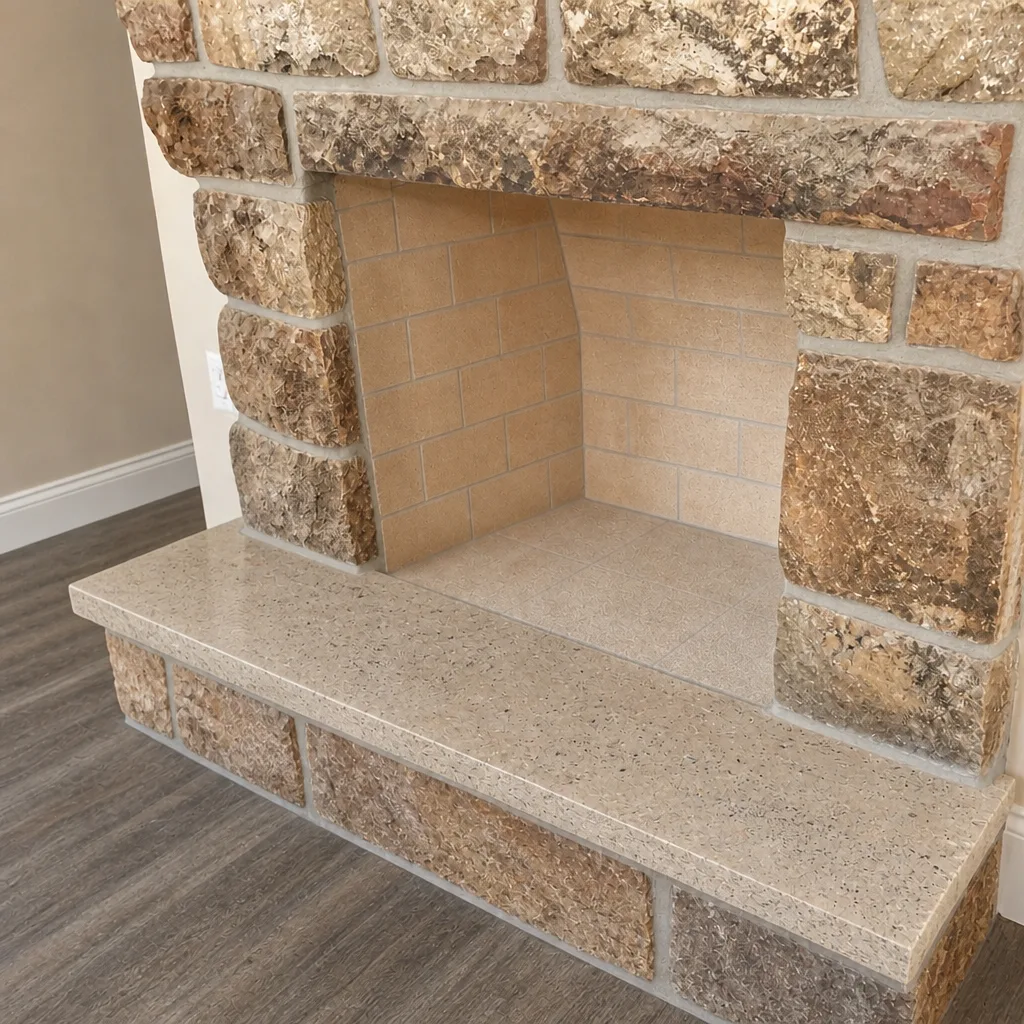
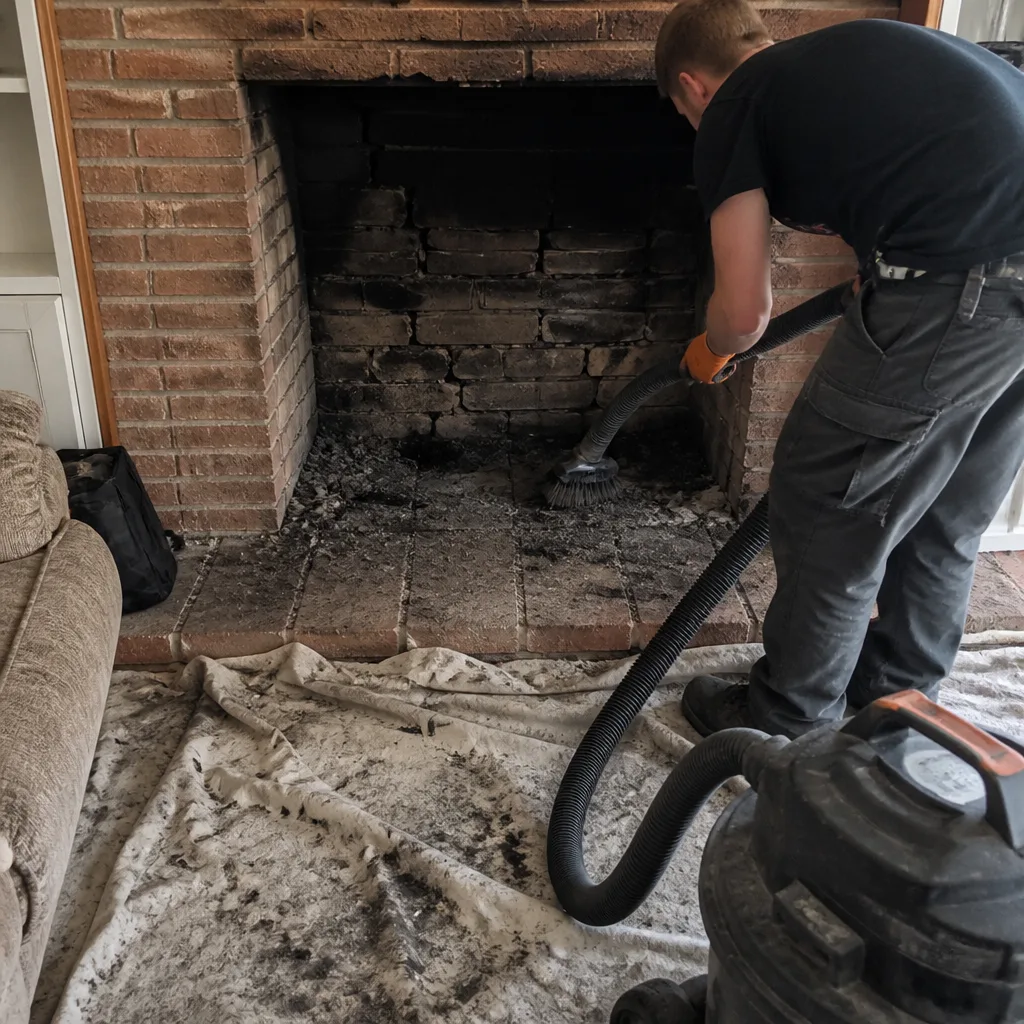
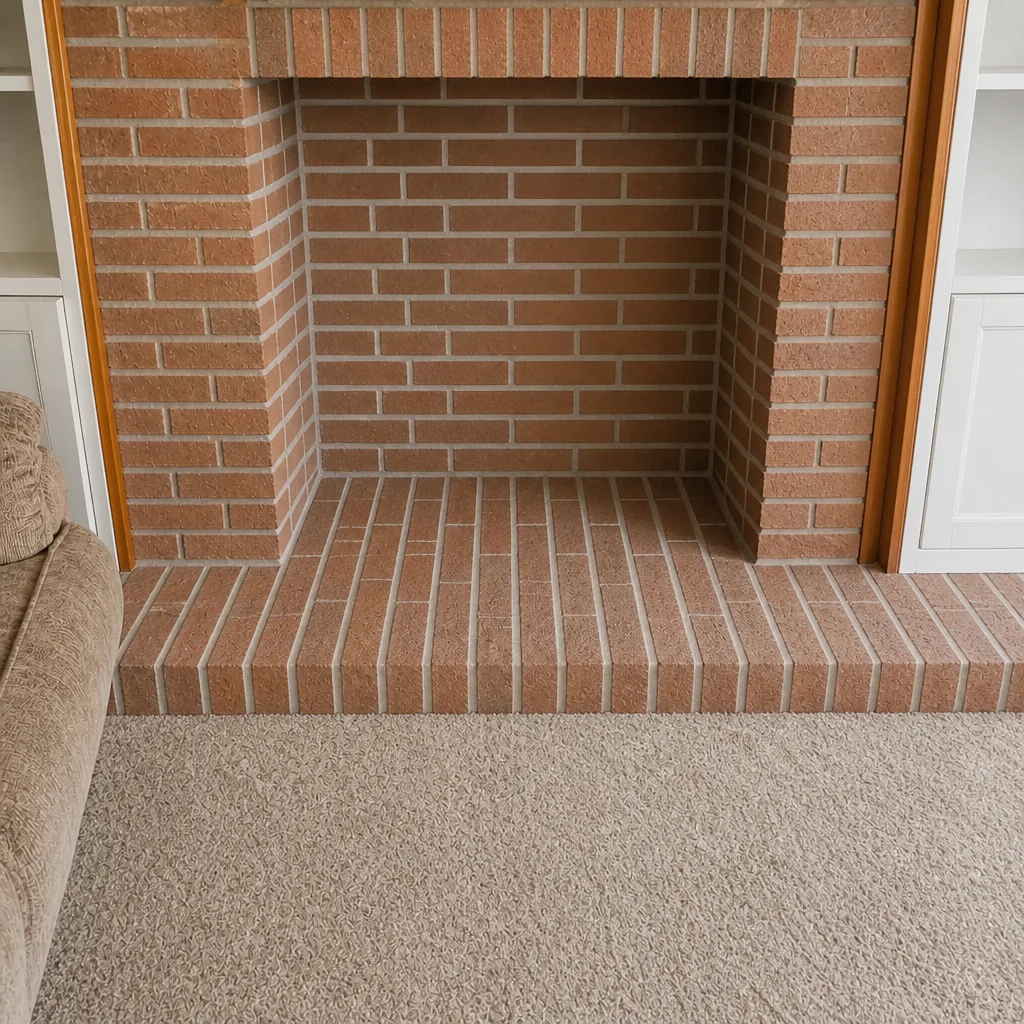
See the difference
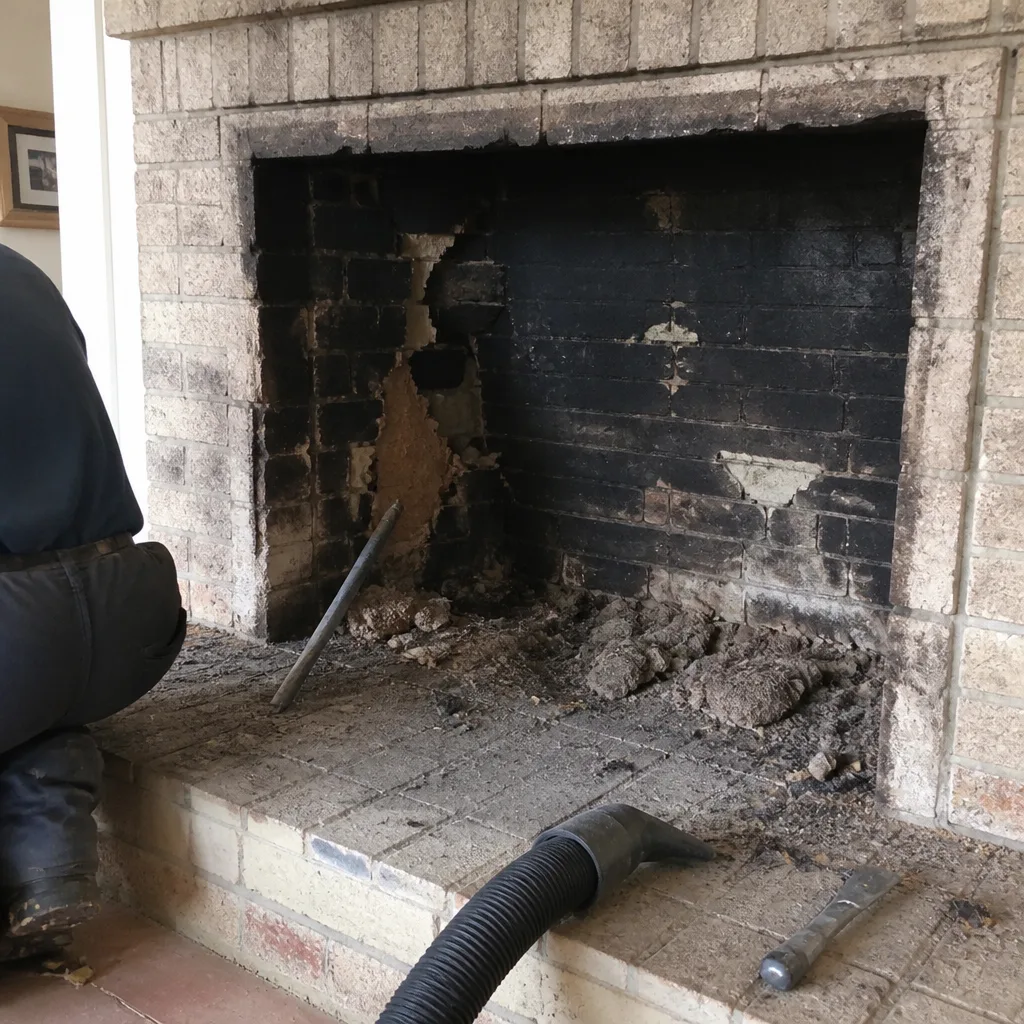 Before
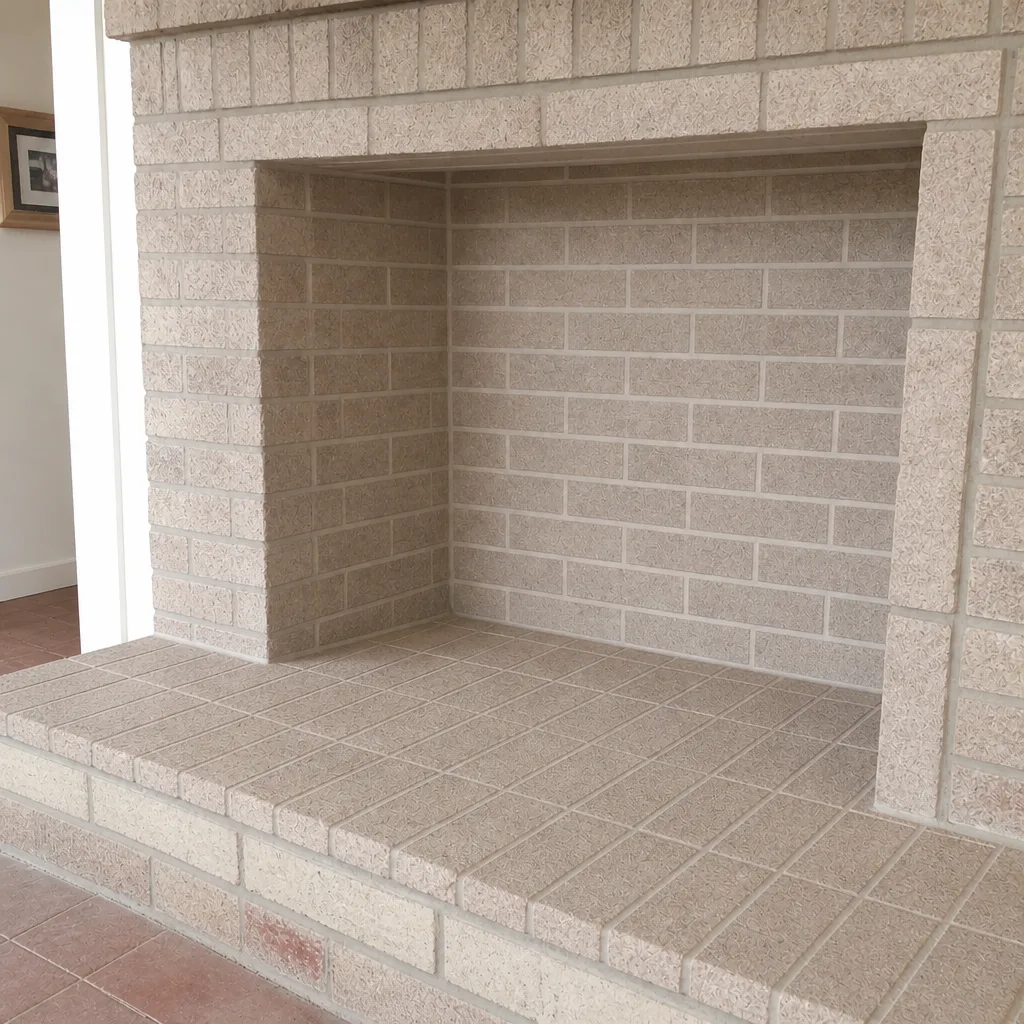 After
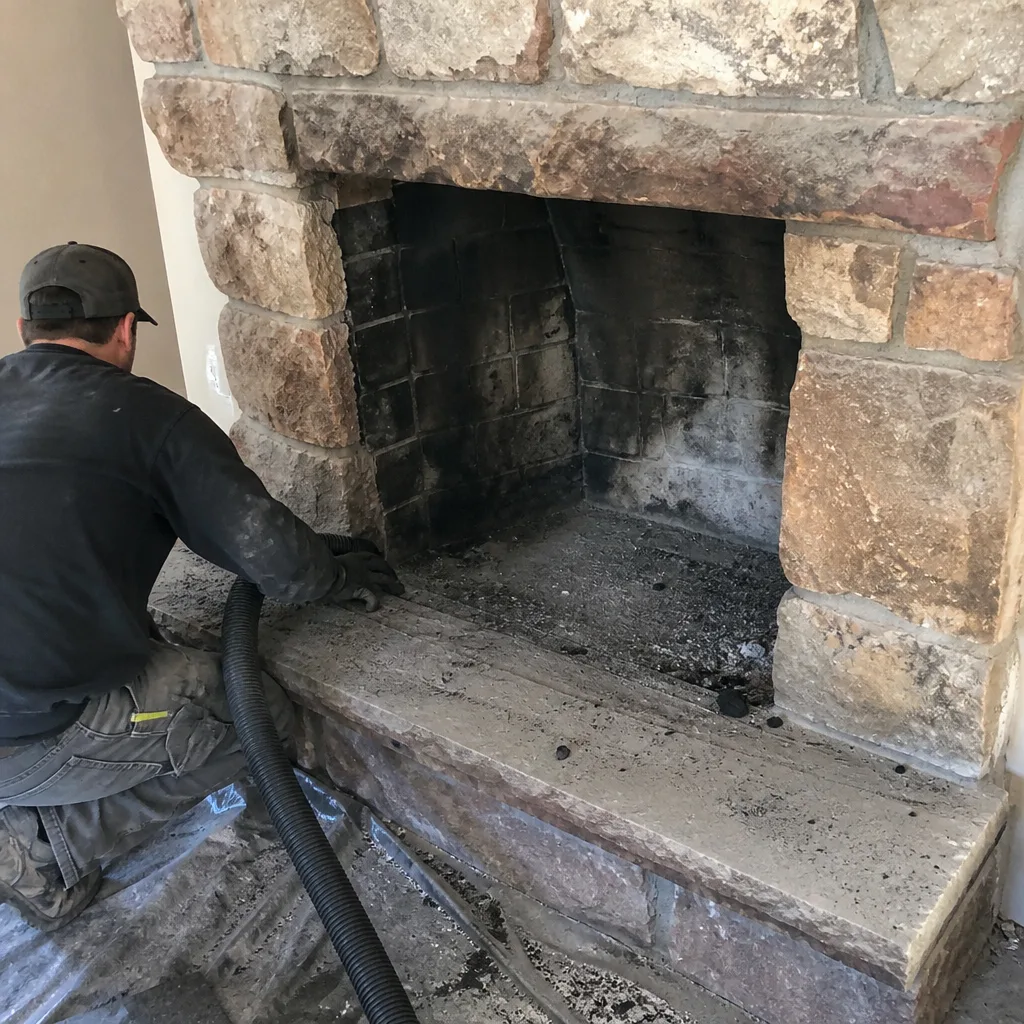 Before
 After
 Before
 After
When to Call a Professional
Call a professional when the flue hasn’t been assessed with a camera, when you’ve had any chimney fire (even a small one), when you smell creosote after a burn, when smoke puffs back into the room, or when you’re burning enough wood that the annual sweep cadence stops being a formality. In Clearfield, with the burn hours the Wasatch Front winter produces, the professional sweep is the baseline – DIY is the between-visits maintenance on top of it. A sweep with camera inspection and a photo report is what turns “I think the chimney is fine” into a documented assessment you can act on. Chimney Sweep Clearfield offers free estimates in Clearfield – call (877) 820-8427. We answer 24/7, fast dispatch from 7am to 7pm, Sunday through Friday.
Frequently Asked Questions
A typical Clearfield chimney sweep is priced per job, not per hour, and the written estimate is what sets the final price. The estimate is free, so the honest first step is to call and get one rather than to guess. Call (877) 820-8427 for an exact quote – estimates are free.
Partially – you can maintain a flue that’s already been professionally cleaned and inspected, but you can’t safely replace the initial assessment. A consumer kit removes loose soot; it doesn’t assess creosote stage or liner condition. Without a camera inspection, a clean-brush result isn’t proof the flue is safe.
We run camera inspection on every sweep because it’s the only way to see hairline tile cracks, gap at liner joints, and stage 3 glaze in the upper flue. Most chimney problems that turn expensive were visible on camera long before they turned expensive. The inspection is what separates a real assessment from a flashlight guess.
Annually is the floor, and Clearfield’s long burn season makes the annual cadence a genuine requirement rather than a suggestion. If you burn heavily, or damper fires overnight, you may want a professional look before each heating season. Clean burning fires build deposits more slowly than slow, smoldering fires.
Nothing dramatic at first – which is the problem. Small creosote deposits build into a stage 3 glaze over a few seasons, and a hairline tile crack can open into a pathway without any visible change from the firebox. The reason to get a professional assessment isn’t a fear pitch; it’s that the DIY-only approach quietly removes the one signal that would tell you something has changed. That’s the false-confidence problem in one sentence.
Yes, in many cases. HeatShield is a non-demolition flue restoration system that repairs damaged clay tile liners without full demolition. Whether it’s the right fix for your flue depends on the camera findings, which is why the inspection comes first. If the flue is repairable with HeatShield, that’s a far smaller job than a rebuild.
The Bottom Line
DIY chimney cleaning isn’t irresponsible – it’s just narrow. Ash removal, damper checks, ground-level cap inspection, and maintaining a flue that’s already been professionally assessed are all legitimate homeowner work. The line is at the flue itself: rotary cleaning, creosote-stage assessment, and liner inspection with a camera all require equipment and training a consumer kit doesn’t provide. In Clearfield, with the burn hours the local winter produces, the professional sweep is the baseline and DIY is the maintenance between visits. Get the assessment first, then maintain with confidence – and when a cap, crown, or liner needs real work, that’s our job. Chimney Sweep Clearfield works with HeatShield, Gelco, Olympia Chimney, and the other professional-grade brands your chimney installer used. Call (877) 820-8427 for a free estimate. We answer 24/7. Fast dispatch from 7am to 7pm, Sunday through Friday.
Written by the team at Chimney Sweep Clearfield.