
Last updated November 24, 2026
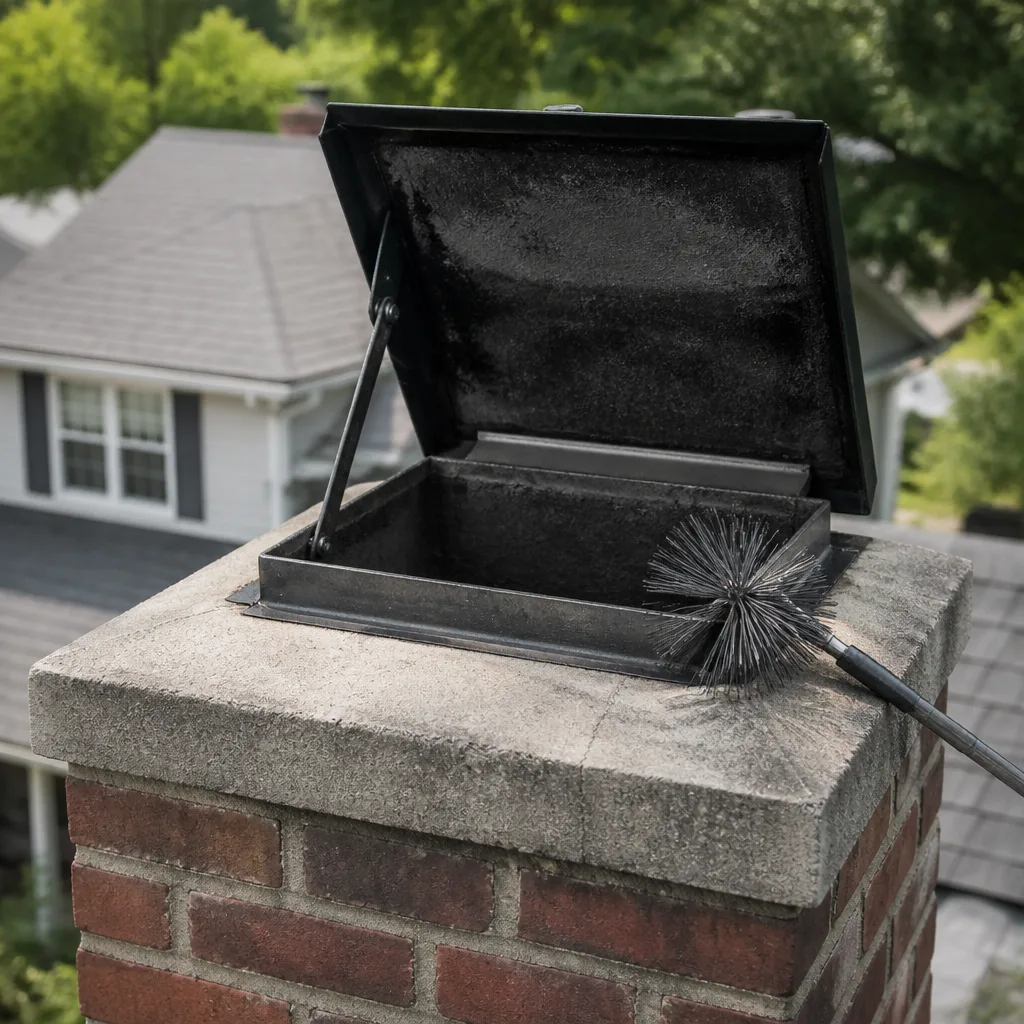 Sweep & inspection
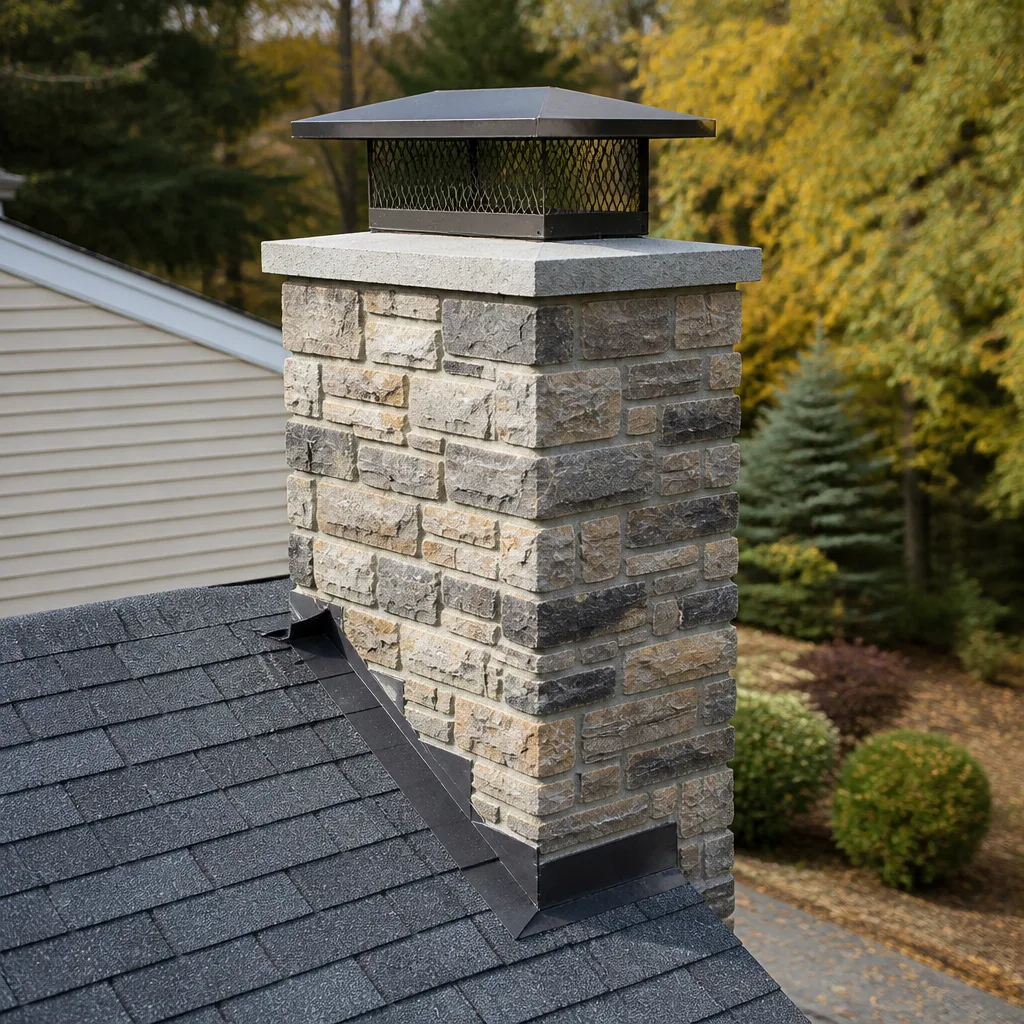 Caps & crowns
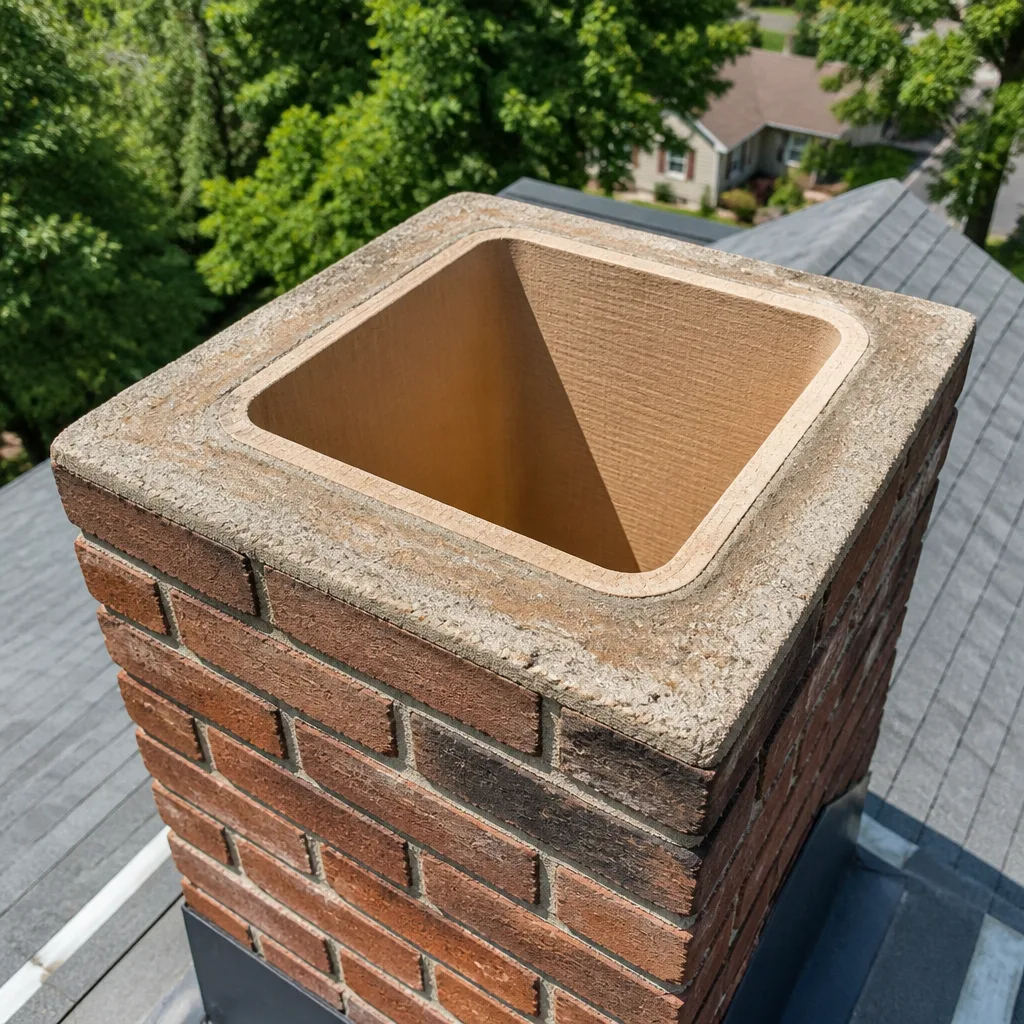 Flue relining
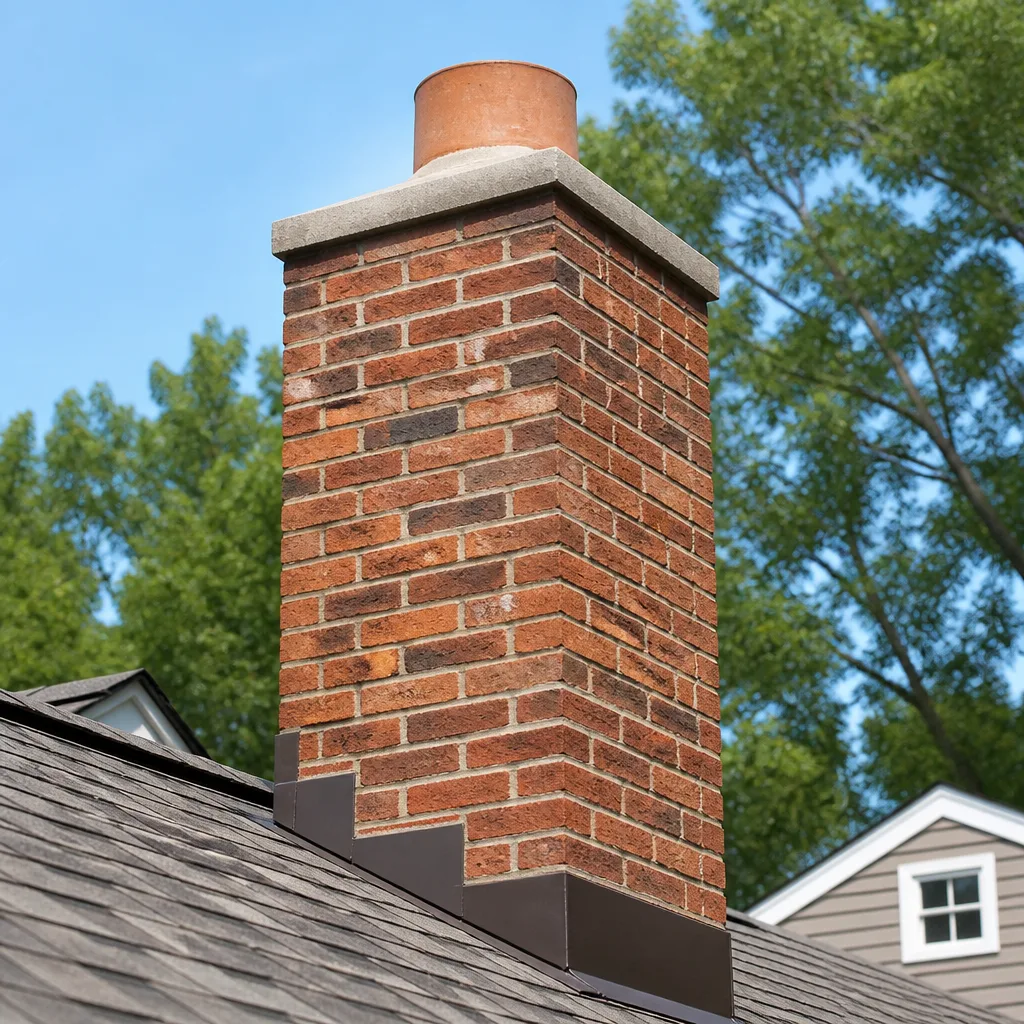 Masonry repair
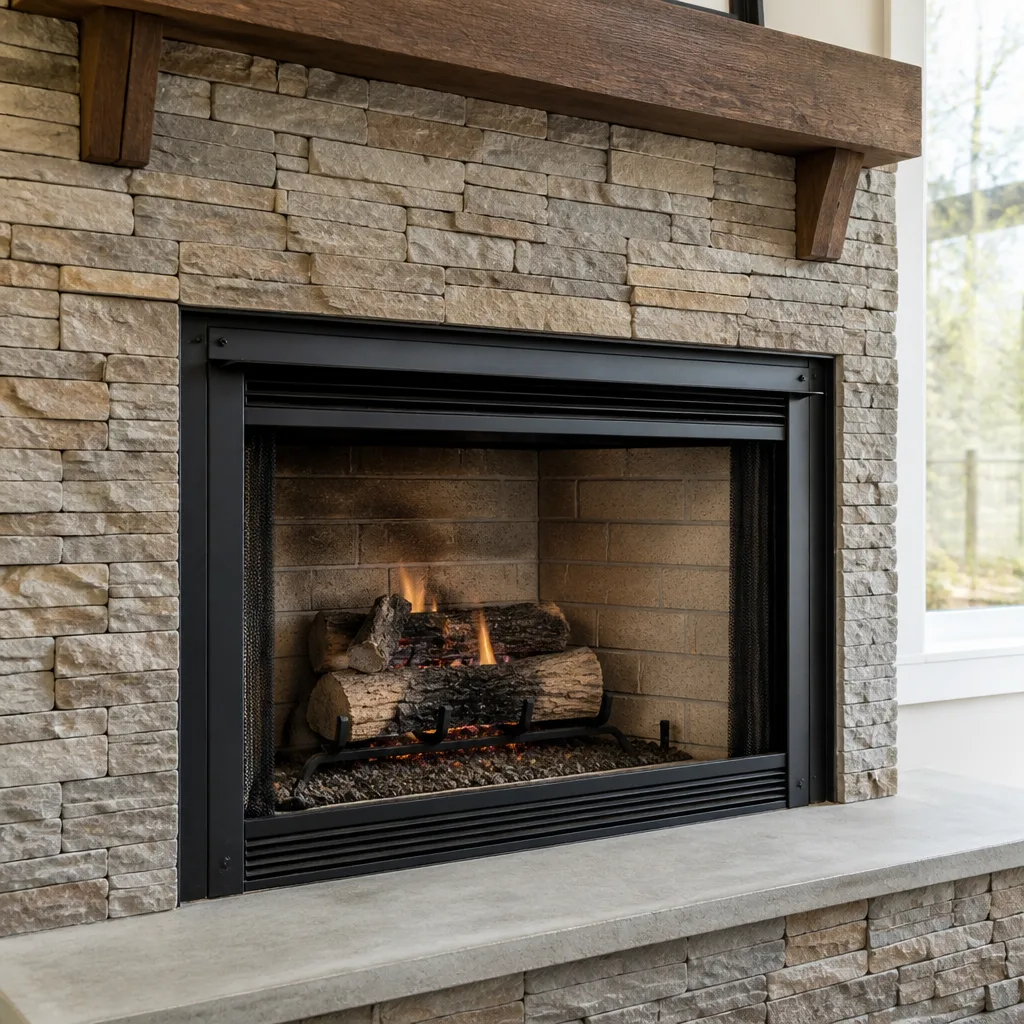 Gas fireplace service
Level 1 sweep and inspection to the NFPA 211 annual standard - flue, crown, cap, and flashing checked and photographed
Chimney sweep logs do not sweep chimneys. They loosen some creosote - which then falls where a brush and vacuum still have to collect it.
Chimney Sweep Maintenance Checklist for Clearfield Homeowners
The standard “sweep once a year” advice was written for average use. If you’re burning more than two cords of wood a season in Utah, that schedule is already behind. A checklist built for a gas insert in a mild climate won’t protect a wood-burning fireplace that runs hard from October through March, and Clearfield sits at an elevation where the shoulder seasons swing hard enough to crack a crown before the first real cold. This guide gives you a task-by-task framework tied to how your specific chimney actually works, so you can inspect what’s checkable, log what a technician needs, and understand exactly when work can wait and when it can’t.
Quick Answer
A chimney maintenance checklist for a Clearfield home should follow the seasons: pre-season checks on the crown, cap, and flashing before the first fire; mid-season attention to draft and smoke behavior without climbing the roof; post-season cleaning and moisture control through the dry summer; and a burn log that tells a technician exactly how the system was used. Masonry fireplaces, prefab metal units, and freestanding stoves each need their own version of that list.
Styles & brands we work with
- Sweep & inspection
- Caps & crowns
- Flue relining
- Masonry repair
- Gas fireplace service
Table of Contents
- Why Generic Maintenance Advice Falls Short in Clearfield
- The Pre-Season Checklist: Before the First Fire
- Mid-Season Checks You Can Do Without Going on the Roof
- Post-Season Tasks That Prevent Summer Moisture Damage
- How to Log Burns and Fuel Type for Accurate Service Data
- Checklist Differences by Chimney Type
- How Often Should Clearfield Chimneys Be Swept?
- What a Professional Sweep and Inspection Actually Involves
Why Generic Maintenance Advice Falls Short in Clearfield
Most chimney maintenance guides are written for a national average. Clearfield isn’t average. The town sits at roughly 4,500 feet along the Wasatch Front, where winter nights drop well below freezing and daytime highs can climb thirty degrees higher, sometimes within a single afternoon. That freeze-thaw cycle works on masonry mortar, crowns, and flashing year after year. A hairline crack that opens in January widens by spring.
The burning pattern matters just as much. Many Clearfield homes heat with wood as a primary or secondary source through a long, cold season, which means creosote accumulates faster than the “annual sweep” rule assumes. A household running two to three cords of seasoned hardwood through a fireplace or insert builds up glazed creosote in ways that a weekend-fireplace household never will. The same fireplace in a milder climate could go two seasons between sweeps; here it usually can’t.
The third local factor is the summer. Clearfield summers are hot and dry, and a chimney that sat idle from April to October collects dust, nests, and the first signs of moisture damage in the flue. The off-season isn’t a break for the system. It’s the window when small problems become expensive ones. That’s why this checklist runs year-round rather than cramming everything into fall.
We work on Clearfield chimney systems every season, and the pattern we see most often is a homeowner who did everything right in October and forgot the system entirely by April. The spring and summer tasks in this guide exist because that’s when the damage quietly happens.
The Pre-Season Checklist: Before the First Fire
The goal of the pre-season checklist is simple: make sure the structure is sound and the flue is clear before you introduce fire, smoke, and heat. In Clearfield, most of this work happens in late September and early October, before the first serious cold snap and before the first burn of the season.
Work through these in order, top to bottom, so you don’t miss anything:
- Crown. Look at the concrete or mortar crown at the top of the chimney. Any crack wider than a hairline, any spalling, and any gap where the crown meets the flue is a place water will get in. Crown repair and rebuilding is the single most common pre-season fix we recommend, and it’s cheaper done in fall than after a winter of freeze-thaw.
- Cap. Confirm the chimney cap is intact, properly sized, and still fastened down. A missing or loose cap lets rain straight into the flue and gives birds and squirrels an open door all winter.
- Flashing. Check where the chimney meets the roof. Lifted, cracked, or missing flashing is a roof leak waiting for the first snow melt. This is a repair item, not a cleaning item, and it’s the one most often skipped.
- Flue and firebox. A professional sweep before the first fire removes last season’s creosote and gives you a documented look at the flue tiles and firebox mortar. This is where a trained eye catches the early liner damage a homeowner can’t see.
- Damper and smoke shelf. Operate the damper through its full range and confirm it seals and opens smoothly. A sticky damper is a sign of debris, warping, or a broken linkage.
- Firebox mortar and firebrick. Look for crumbled mortar joints, cracked firebrick, and gaps between the firebox and the surround. These get repaired more easily in fall than mid-winter.
- Cap clearance and draft path. Confirm nothing nearby (trees, a new addition, a taller roofline) has changed how the chimney drafts since last season.
If you’re not comfortable on a roof, don’t go up. The crown and cap can be assessed from the ground with binoculars, and a professional sweep includes a proper look at the top of the system. Our team at Chimney Sweep Clearfield handles the full pre-season sweep, inspection, and cap or crown work as a single visit so nothing on this list gets forgotten between contractors.
Mid-Season Checks You Can Do Without Going on the Roof
Once the burning season starts in Clearfield, your job changes. You’re not climbing anything. You’re reading the system’s behavior and logging what it tells you. Most serious chimney problems announce themselves through draft symptoms weeks before they become structural ones, and those symptoms are checkable from inside the house.
Watch for these indicators through the winter:
- Downdraft odors. A cold chimney that smells smoky when it’s not in use usually means a draft reversal, a blockage, or a pressure problem in the house. Persistent odor between burns is a reason to book an inspection rather than wait for spring.
- Smoke rollout. Smoke spilling into the room when you open the firebox door, or when the fire is first lit, points to a draft problem, an obstructed flue, or a chimney that’s undersized for the firebox opening. Don’t ignore rollout; it’s a carbon monoxide and smoke exposure risk.
- Damper drag. A damper that becomes harder to move as the season progresses is often telling you about soot buildup, warping from heat, or debris that fell down the flue. If it stops moving freely, stop forcing it.
- Creosote smell or visible glaze. A strong creosote smell when the fireplace is cold, or shiny black glaze visible on the firebox walls, means the flue is loading up faster than expected. This is your cue to move the next sweep forward.
- Smoke coming from the top of the firebox or mantel seams. This can indicate cracks in the firebox assembly and should be inspected promptly.
- Carbon monoxide detector behavior. Any alarm, even a brief one, means stop burning and have the system inspected. This isn’t a wait-and-see situation.
We get calls from Clearfield homeowners every winter asking whether a symptom can wait until spring. Sometimes it can. Often it can’t, and the honest answer depends on what the symptom is pointing to. A camera inspection settles that question quickly and gives you something to look at rather than a guess.
Post-Season Tasks That Prevent Summer Moisture Damage
Spring is when a Clearfield chimney earns or loses the next decade of its life. The burning stops, the system cools, and for the next five or six months the flue, firebox, and crown sit exposed to dust, rain, and the dry summer heat. Water is the persistent enemy here, not fire.
Here’s what needs attention at the end of the burning season:
- Final sweep. Clear the flue of the season’s creosote before summer. Creosote left sitting through the hot months can harden into glazed deposits that are harder to remove in fall, and it holds moisture against the flue tiles.
- Firebox and mortar review. Summer is the season when small mortar cracks from the winter spread. A spring review catches them while they’re still repairable with straightforward masonry work.
- Flue liner inspection. Clay tile liners crack under thermal cycling, and a crack that’s minor in April is a carbon monoxide pathway by October. If the tiles are cracked but the structure is otherwise sound, HeatShield flue restoration can repair the liner without tearing apart the fireplace. That’s a specialist service most general chimney companies don’t offer, and it’s worth asking about directly if your inspection report flags tile damage.
- Crown reseal or rebuild. Any crack found in fall inspection should be addressed before summer rain gets into it. Crowns are cheaper to seal now than to rebuild later.
- Cap check after storm season. Spring winds move caps. Confirm the cap is still seated and fastened after the last of the season’s storms.
- Close the system. A properly fitted cap and a sound crown are what keep summer rain out of the flue. Caps and crowns aren’t upsells; they’re the protection that makes the spring sweep last.
We see the same pattern every May across Clearfield: chimneys that were swept and cared for in the fall, then left open to the summer. The fix is a single spring visit that covers the sweep plus the moisture-control work in one trip. If you’ve had chimney sweep service done in the fall, this is the follow-up most homeowners skip and later regret.
How to Log Burns and Fuel Type for Accurate Service Data
The single most useful thing a Clearfield homeowner can hand a technician is a burn log. It doesn’t need to be elaborate. A notebook by the wood bin or a note on your phone works fine. The point is to give the technician real data instead of a vague “we burn a fair amount.”
Log these details:
- Approximate cords burned. Even a rough count (“about two cords,” “about three”) is more useful than “a lot.” Creosote rate is directly tied to fuel volume.
- Fuel type. Seasoned hardwood, softwood, manufactured logs, and scrap wood all burn differently. Softwood and unseasoned wood produce more creosote per cord than well-seasoned hardwood.
- Burn frequency. Daily through the season versus weekends-only changes the recommended sweep interval.
- Draft symptoms noted. Any smoke rollout, damper drag, or odors you noticed and when they appeared.
- Fire-starting method. Top-down versus bottom-up lighting, and whether you use fire starters or paper, affects smoke and creosote patterns.
- Any repairs done during the season. A cracked firebrick you replaced, a damper you adjusted, a cap you re-seated.
When we do an inspection, that log gives us a real read on how the system has been loaded. It’s the difference between recommending a cleaning and recommending a cleaning plus liner evaluation. The chimney repair conversation goes a lot faster when the technician can see exactly what the system has been through since the last visit.
Checklist Differences by Chimney Type
Not every Clearfield chimney needs the same checklist. The right tasks depend on what kind of system you have, and the three broad categories behave very differently over a Utah winter.
Masonry Fireplaces (Brick and Mortar)
Masonry chimneys are the most common type in older Clearfield homes and the most vulnerable to freeze-thaw. The checklist for these emphasizes mortar joints, crown integrity, clay tile liner condition, and firebox repair. The mortar in the firebox and crown expands and contracts with the seasons, and cracks propagate over time. HeatShield flue restoration is a strong fit here because it repairs damaged tile liners without full demolition. DuraFlex flexible liner systems are the right call when an offset or complex flue needs a new lining that a rigid liner won’t navigate.
Prefab Metal Units (Factory-Built Fireplaces)
Prefab units have thinner liners and specific manufacturer clearances that must not be altered. The checklist focuses on the cap, the firebox panel condition, the flue’s stainless or refractory liner, and the gasket seals. Creosote accumulates faster in some prefab units because the flue is smaller in diameter relative to the firebox. If the liner has failed, these systems typically need a relining rather than a restoration. Olympia Chimney and Copperfield are two of the professional relining brands we work with when a prefab needs a fresh liner installed correctly.
Freestanding Stoves and Inserts
A wood stove or insert concentrates heat and produces more creosote per cord because it burns longer and hotter than an open fireplace. The checklist here adds connector pipe inspection, stove gasket seals, and draft collar checks. Inserts also create more of a challenge for cleaning because the sweep has to remove the insert or work around it. Log the burn data carefully if you run a stove; the sweep interval will be shorter than a masonry fireplace burning at a similar volume.
How Often Should Clearfield Chimneys Be Swept?
The honest answer is that the schedule depends on how you burn, and if you’re burning more than two cords a season in Clearfield, once a year is the floor, not the ceiling. A household running the fireplace daily from October through March should plan on one sweep in late summer or early fall and a second mid-season sweep if the firebox is showing glazed creosote or heavy buildup.
A gas appliance is a different schedule. Gas chimneys don’t produce creosote in the same way, but they do need inspection for venting integrity, blockage from pests, and corrosion, especially in homes where the gas insert runs through the winter. The professional recommendation is an annual inspection regardless of fuel type, with the actual cleaning frequency adjusted to what the technician finds.
| Burn Pattern | Typical Sweep Interval | Best Time to Book |
|---|---|---|
| Less than 1 cord, occasional use | Once per year | Late summer, before first fire |
| 1-2 cords, regular weekend use | Once per year, plus inspection | Late summer and spring review |
| 2-3 cords, daily seasonal use | Twice per year | Late summer and mid-winter |
| 3+ cords, primary heat source | Two to three times, depending on buildup | Before season, mid-season, and spring |
| Gas appliance only | Annual inspection (cleaning as needed) | Any season before spring |
These are estimates, not fixed rules. The written inspection report tells you what your specific Clearfield system actually needs, and it’s worth asking for it in writing so you can plan the year around actual findings rather than guessing.
What a Professional Sweep and Inspection Actually Involves
A proper chimney sweep in Clearfield is two services in one visit: the cleaning and the documented inspection. The cleaning alone tells you very little about the condition of the liner, the crown, or the firebox. The inspection is what lets you make a plan.
The process we follow is straightforward:
- Pre-service review. We look at the firebox, firebox opening, damper, and any visible signs of draft problems before cleaning starts. This is where we look at your burn log and ask about the season’s symptoms.
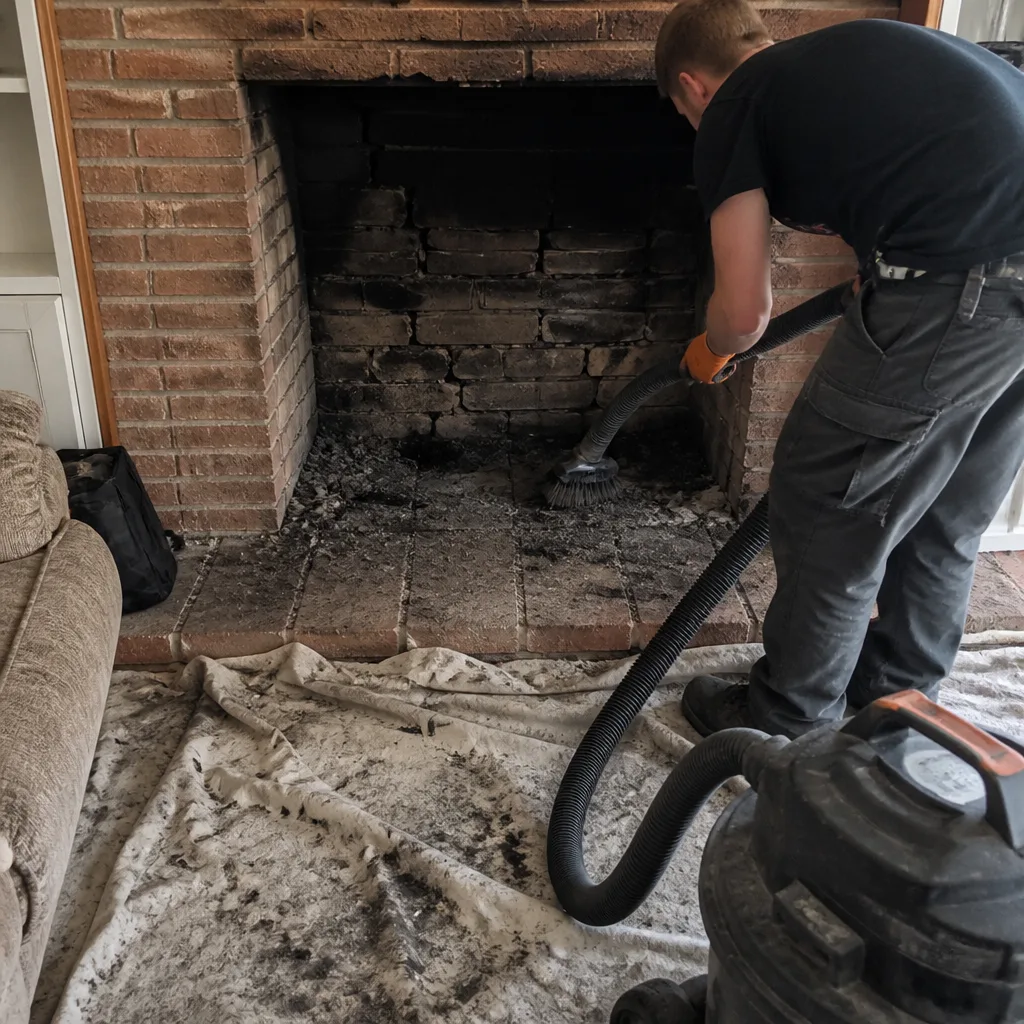
- Protection and cleaning. Drop cloths go down, the flue is swept from top to bottom with the right size brush and rods for the flue, and the creosote is collected. A masonry flue and a prefab metal flue need different tools and pressures.
- Camera inspection of the flue. A camera run through the flue shows the clay tiles or metal liner from the inside. Any cracks, gaps, or damaged sections show up on camera, and you get to see them.
- Crown, cap, and flashing review. The top of the system is where the water damage begins, and the sweep visit is the moment to catch it.
- Photo report and written findings. Any recommendation should be backed by a photo you can see yourself. Nothing about this process requires you to take someone’s word for a thousands-of-dollars liner job.
We work with the same materials professional chimney installers specify, including DuraFlex, Copperfield, and Gelco, and our technicians have up to 9 years of experience across the full chimney system. The sweep plus inspection is the foundation, and fireplace repair or liner work is only on the table when the inspection report actually calls for it. The written estimate sets the final price, and the inspection photo is what justifies the work.
Common Mistakes to Avoid
- Burning unseasoned wood to save money. Green wood produces far more creosote per cord, and in a Clearfield winter where the fireplace runs daily, that creosote accumulates within a single season. The savings on the wood are quickly eaten by the extra sweep and the liner risk.
- Associating a cap with a luxury add-on. A missing or damaged cap lets rain, snow, and pests into the flue all winter, and it undoes the sweep work in weeks. Caps are basic protection, not an upsell.
- Cleaning the firebox and calling it a sweep. The flue is where the creosote lives, and the firebox is only the visible part of the system. Sweeping is a flue job, and it needs the right tools run top-down.
- Skipping the summer inspection. Clearfield summers are dry and stormy in turn, and the crown and mortar are exposed to both. A spring review catches a mortar crack while it’s still a small fix and before it becomes a rebuild.
- Burning scrap lumber, cardboard, or treated wood. Treated wood and construction scraps release corrosive compounds and produce far more creosote than seasoned firewood. The flue and the firebox take the damage.
- Burning without a working carbon monoxide detector. A CO detector is not optional for a home with a wood-burning or gas fireplace, and it’s the cheapest layer of protection in the whole system. Test it before the first fire.
- Trusting a “sweep” that doesn’t include a camera inspection. A cleaning without an inspection gives you a cleaner flue and no information about the liner. You should leave every sweep with a photo report of what the technician actually saw.
See the difference
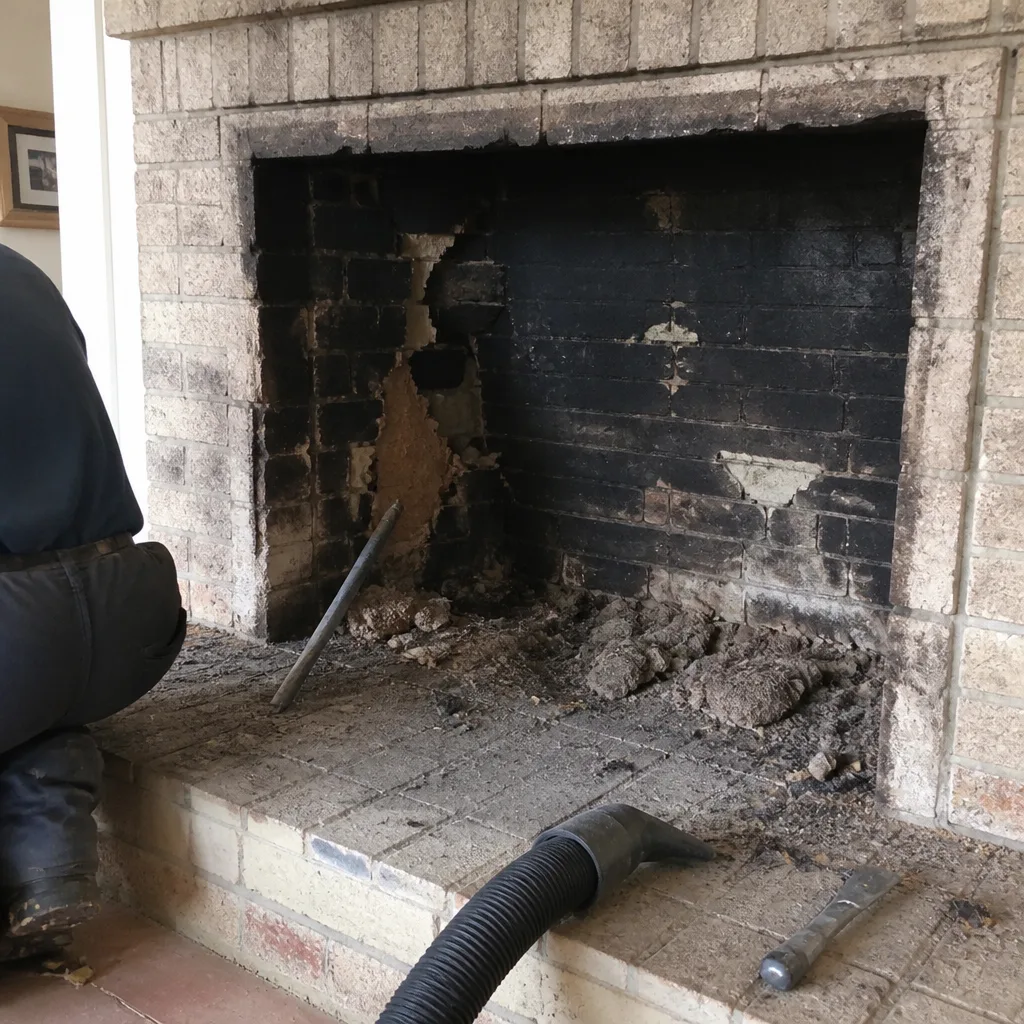 Before
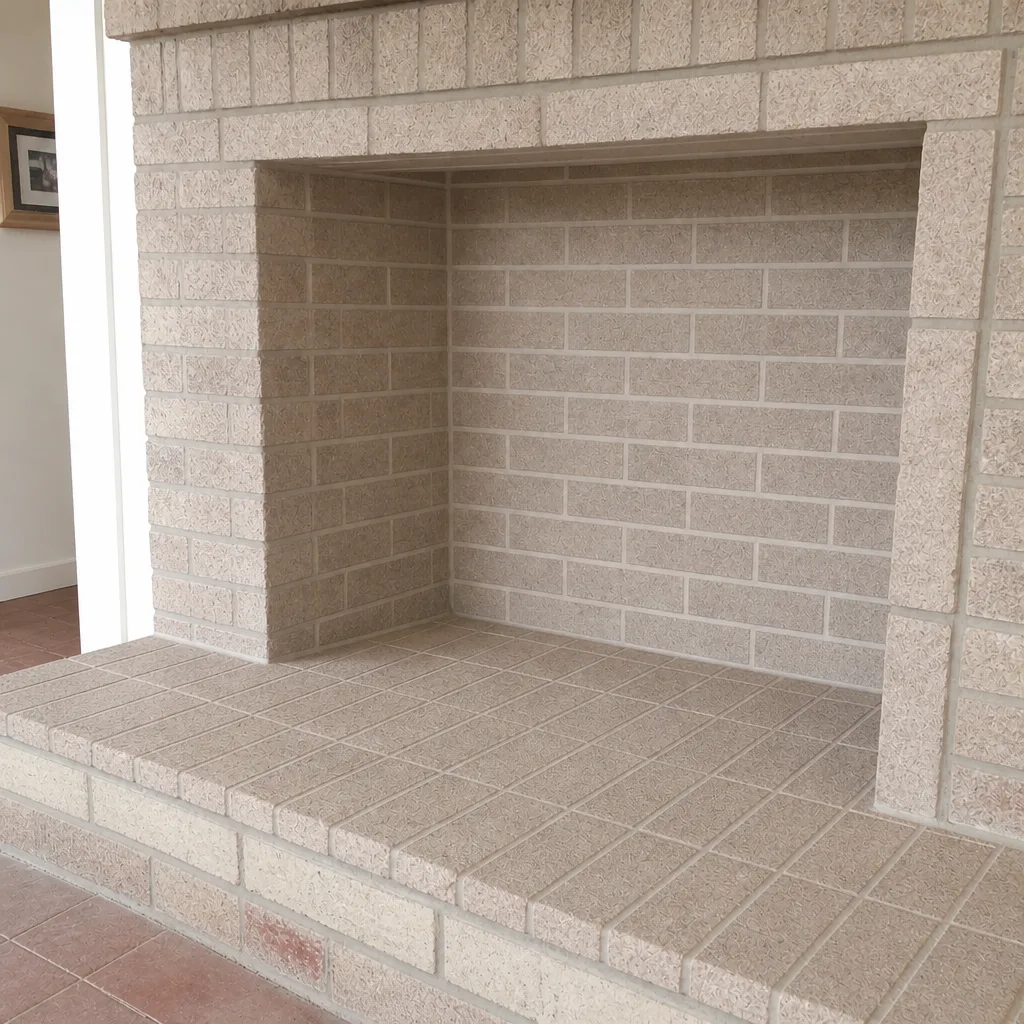 After
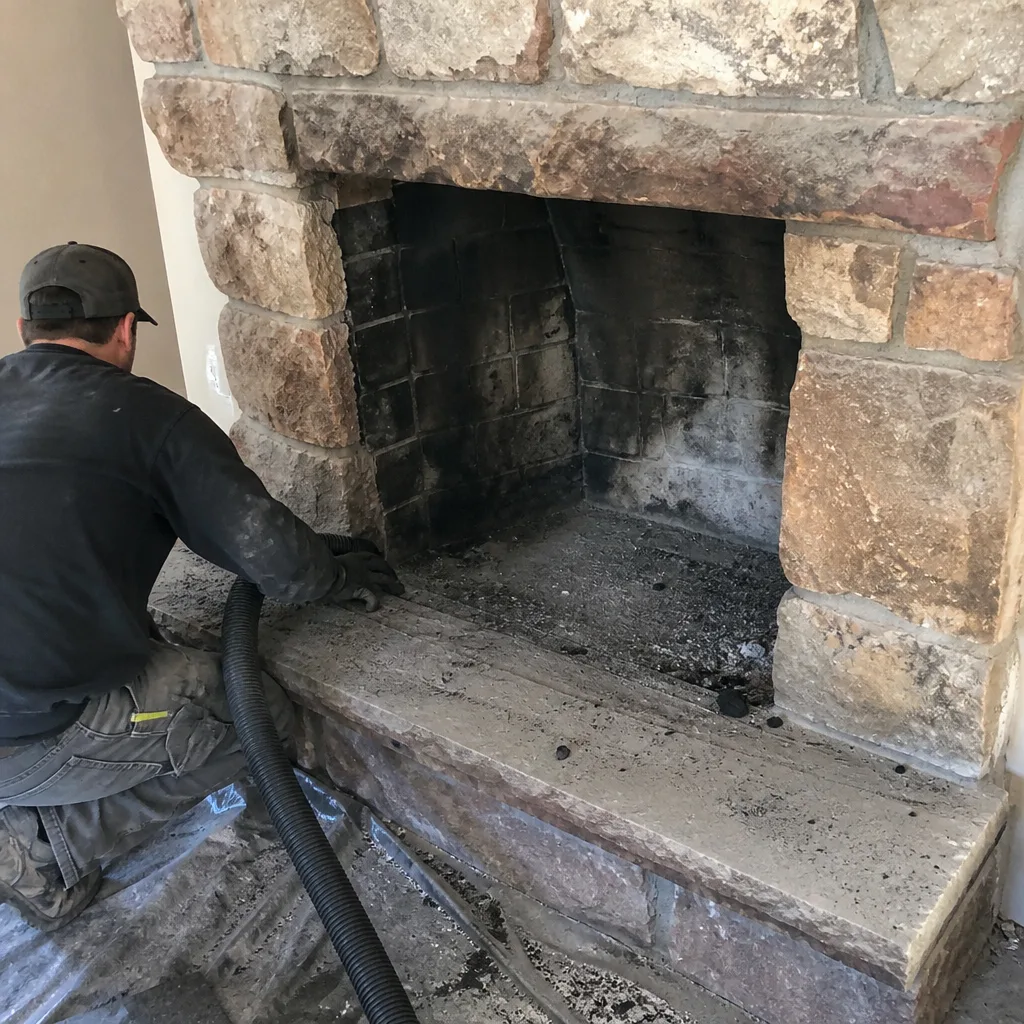 Before
 After
 Before
 After
When to Call a Professional
Some maintenance is homeowner work. Some of it belongs to a trained technician with the right tools and the training to read what they find. Call a professional for any of the following: a symptom of smoke rollout, downdraft odor, or damper sticking that doesn’t resolve after a cleaning; any carbon monoxide alarm; visible damage to the crown, cap, or flashing; suspected liner damage reported by a prior inspection; a firebox crack or crumbled mortar joint; and the standard annual sweep and inspection itself before each burning season.
If you’re unsure, call and describe the symptom. We’ll tell you honestly whether it can wait for a scheduled visit or needs a look sooner. Chimney Sweep Clearfield offers free estimates in Clearfield. Call (877) 820-8427. We answer 24/7. Fast dispatch from 7am to 7pm, Sunday through Friday. A call outside dispatch hours is booked into the next opening.
Frequently Asked Questions
A routine sweep in Clearfield typically runs in the low-to-mid hundreds of dollars depending on the system type, the flue length, and how much creosote is present. The price is set per job by the written estimate, and the estimate is free. Call (877) 820-8427 for an exact quote.
A cracked clay tile liner can often be repaired without demolition using HeatShield flue restoration, which is a specialist service most general chimney companies don’t offer. The right answer depends on the extent of the damage and what the camera shows. You should always see the inspection photo before deciding, and the written estimate sets the final price. Call (877) 820-8427 to schedule an inspection.
Once per year is the floor for a household burning under two cords, and twice per year or more for a home using wood as a primary or heavy secondary heat source through the winter. Clearfield’s long cold season pushes most wood-burning households into the “sweep twice” category. Call (877) 820-8427 to book a sweep and inspection.
Creosote accumulates in the flue, and glazed creosote is the fuel that drives chimney fires. Separately, a cracked liner that goes unnoticed becomes a carbon monoxide pathway into the house. Skipping a season doesn’t produce a visible symptom most homeowners can catch on their own, which is why the annual inspection matters. Call (877) 820-8427 for an inspection before the next burning season.
You can clean a flue with the right brushes and rods, but you can’t inspect it the way a camera inspection can, and the higher fire-risk items (the crown, flashing, and liner interior) are exactly the parts a homeowner can’t check from the ground. For the cleaning you can do, we’d recommend leaving the inspection to a technician. Call (877) 820-8427 for a full sweep and inspection.
A sweep removes creosote and debris from the flue. An inspection documents the condition of the full system (flue liner, firebox, crown, cap, flashing) with a camera and photo report. We do both on the same visit so you leave with a clean flue and a written assessment of the system’s condition. Call (877) 820-8427 to schedule.
The Bottom Line
The right chimney maintenance checklist for a Clearfield home is built around how the system is actually used and how local conditions work on it through the year. Pre-season checks on the crown, cap, and flashing protect the structure before the first fire. Mid-season checks on draft symptoms protect the household through the burning months. Post-season work on the flue and firebox prevents the summer moisture damage that quietly becomes fall repairs. A burn log gives the technician real data, and knowing the differences between masonry, prefab, and stove systems keeps the checklist honest. None of it is complicated. It just has to actually happen every year, in the right order.
If you’re ready to start with the sweep and inspection that anchors the whole checklist, Chimney Sweep Clearfield offers free estimates in Clearfield. Call (877) 820-8427. We answer 24/7. Fast dispatch from 7am to 7pm, Sunday through Friday. A call outside dispatch hours is booked into the next opening.
Written by the team at Chimney Sweep Clearfield.