
Last updated November 24, 2026
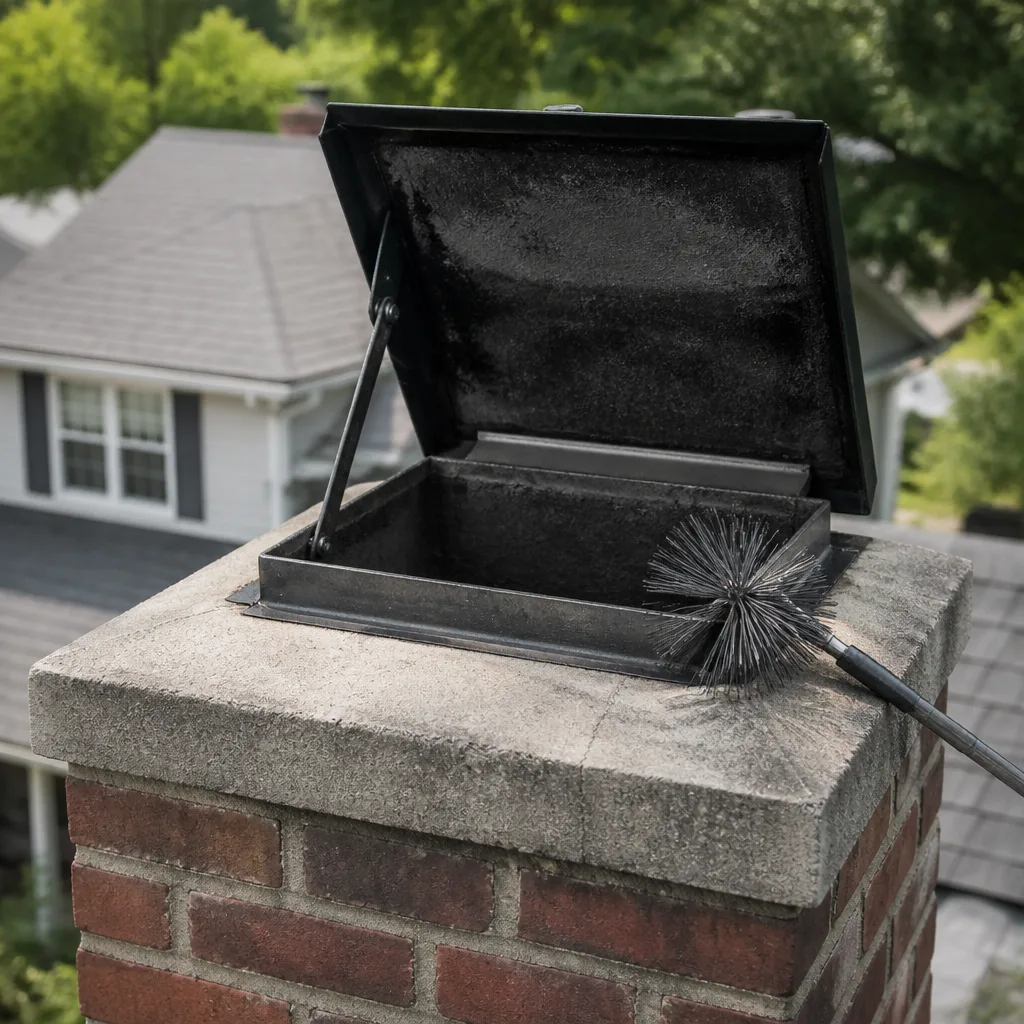 Sweep & inspection
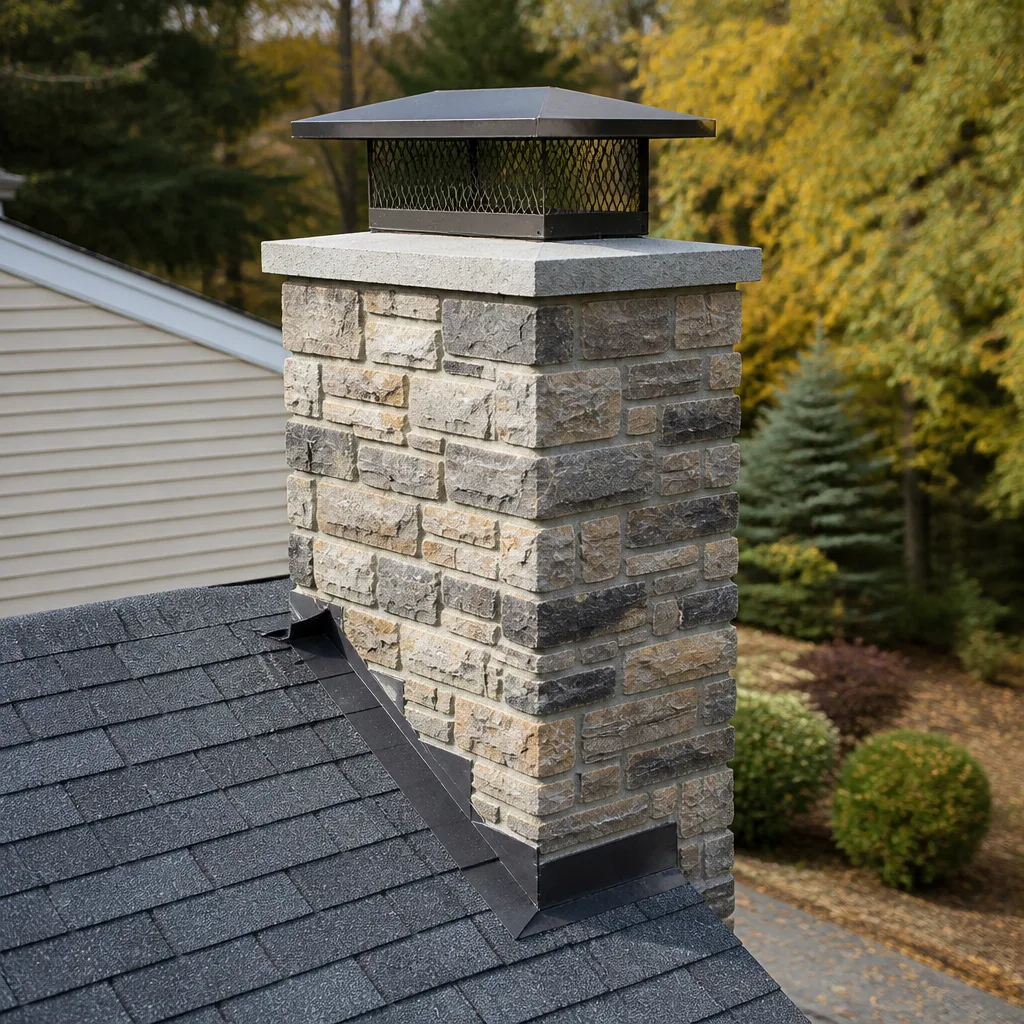 Caps & crowns
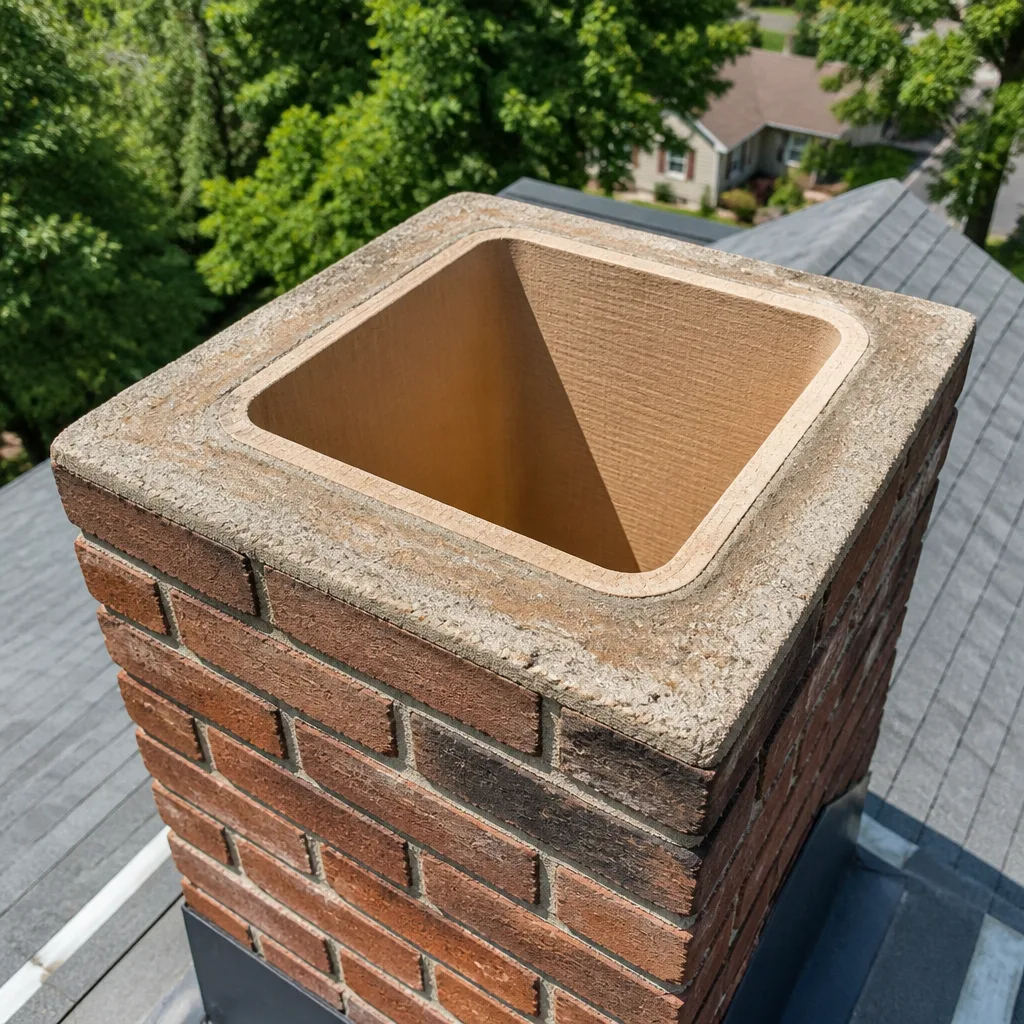 Flue relining
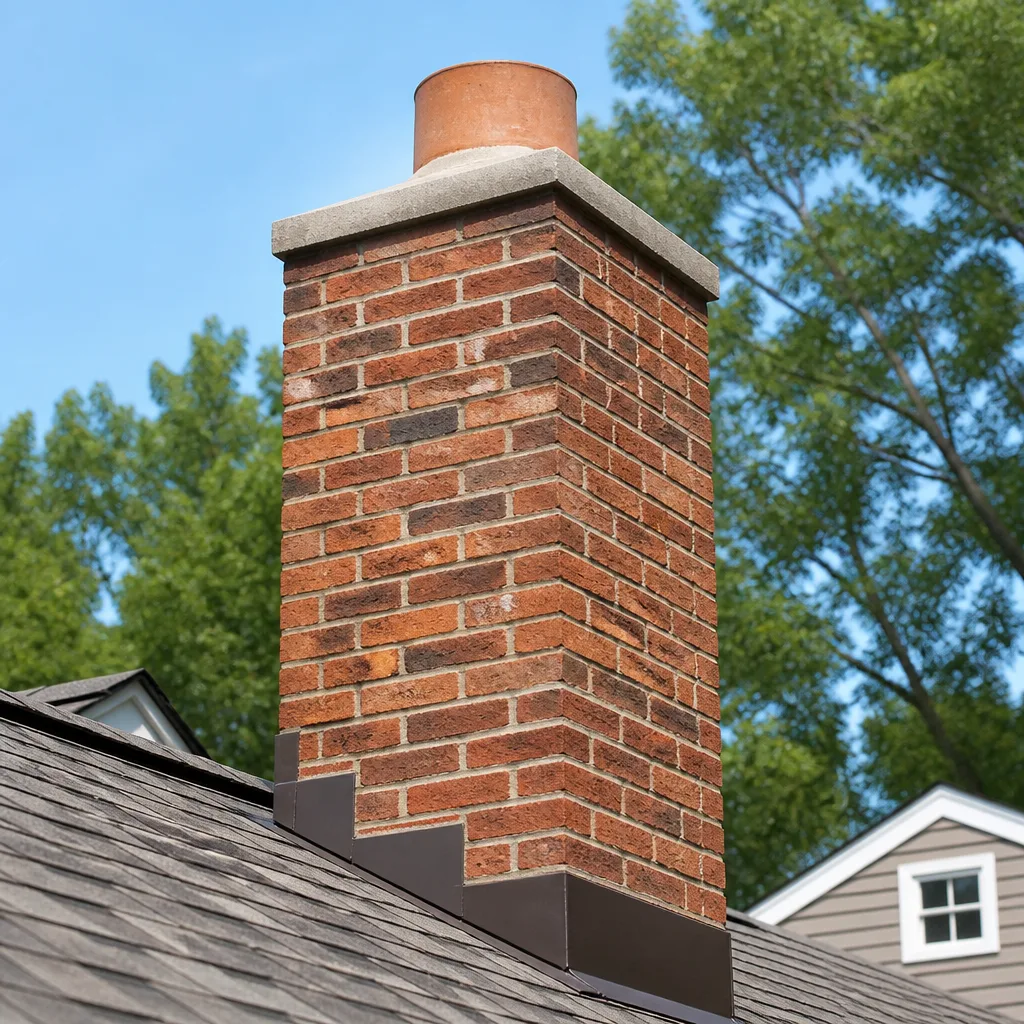 Masonry repair
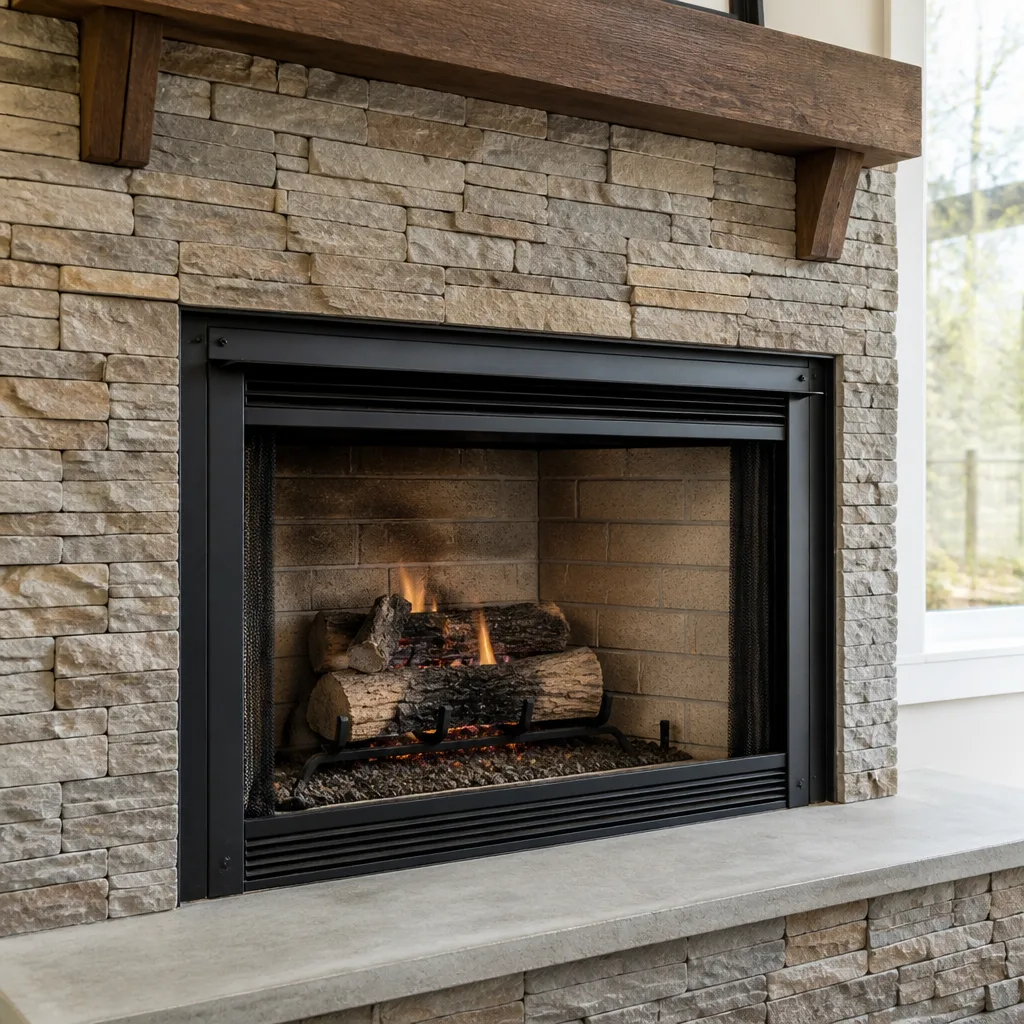 Gas fireplace service
Level 1 sweep and inspection to the NFPA 211 annual standard - flue, crown, cap, and flashing checked and photographed
Chimney sweep logs do not sweep chimneys. They loosen some creosote - which then falls where a brush and vacuum still have to collect it.
Chimney Cleaning Warning Signs: A Clearfield Homeowner’s Reference Guide
A white stain running down your exterior chimney isn’t a cosmetic issue. It’s efflorescence, and it means water has been moving through your masonry long enough to carry dissolved salts to the surface. That’s the thing about chimneys: the serious problems almost never start suddenly. They start as small signals, things a homeowner in Clearfield walks past every day without recognizing. A little soot on the firebox face. A draft that feels weaker than it used to. A sound at ignition you can’t quite place. This guide decodes those signals and explains what each one means structurally, so you can tell the difference between a chimney that needs attention next week and one that can safely wait for the next burning season.
Quick Answer
The most reliable chimney warning signs are spalling brick, white efflorescence staining, cracked crowns, smoke rolling back into the room, weak draft, soot on the firebox face, unusual summer odors, and rattling or animal sounds in the flue. Any of these means the system needs a professional inspection and often a chimney sweep before your next fire. Catching them early is what separates a routine cleaning from major structural repair.
Styles & brands we work with
- Sweep & inspection
- Caps & crowns
- Flue relining
- Masonry repair
- Gas fireplace service
Table of Contents
- Exterior Warning Signs: What Your Masonry Is Telling You
- Interior Warning Signs: Smoke, Draft, and Odor
- Auditory Clues: Sounds You Shouldn’t Ignore
- Why Some Warnings Only Appear in Certain Weather
- Triage: What Needs Same-Week Attention vs. Next-Season Scheduling
- Creosote, Soot, and the Risk You Can’t See
- Protecting What You Just Cleaned: Caps and Crowns
- Common Mistakes to Avoid
- When to Call a Professional
Exterior Warning Signs: What Your Masonry Is Telling You
The outside of your chimney takes the brunt of Clearfield’s weather, and it shows the damage first. Masonry is porous. It absorbs water, holds it, dries slowly, and repeats that cycle through every freeze-thaw winter along the Wasatch Front. What looks like surface wear is often the visible edge of moisture that has been working its way inward for a long time. Reading those exterior signals correctly is the fastest way to know how deep a problem goes.
Here’s what each exterior sign typically indicates, from shallowest to deepest:
- Efflorescence (white, powdery staining): Water has moved through the masonry and carried dissolved salts to the surface. On its own, efflorescence is cosmetic, but it’s the earliest proof that moisture intrusion is happening.
- Spalling brick (faces flaking, peeling, or popping off): The moisture has gone deeper and is now freezing inside the brick, forcing the face apart. Spalling left alone accelerates; each winter takes more of the brick.
- Mortar joint recession (mortar worn back from the brick faces): The joints that bind the chimney together are eroding faster than the brick. Recessed joints let more water in and weaken the structure.
- Crown cracking (fractures across the concrete cap at the top): The crown is supposed to shed water away from the flue. When it cracks, water runs straight down into the chimney interior instead.
- Rusted or missing cap and spark arrestor: The top is open to rain, snow, and animals. This is one of the simplest fixes with the biggest downstream payoff.
In Clearfield, the sequence matters because our winters swing hard between freeze and thaw. A hairline crack in the crown in October becomes a much wider crack by February. That’s why we treat exterior signals as a chain: efflorescence today, spalling next year, mortar failure after that. Each stage is cheaper to arrest than the one it leads to, and the chimney repair work that follows is usually far less involved when the problem is caught at the staining stage.
Walk around your chimney twice a year: once in early fall before burning season, and once in spring after the last fire. Look at the brick faces, the mortar lines, the crown, and the cap. You don’t need to diagnose anything. You just need to know whether the appearance has changed since your last look.
Interior Warning Signs: Smoke, Draft, and Odor
Inside the house, the chimney tells a different story – one about how well the flue is moving air and exhausting combustion byproducts. A wood-burning fireplace depends on a pressure difference: warm air and smoke rise up the flue while fresh air feeds the fire from the room. When that balance changes, the symptoms show up in the living room. In our experience, homeowners in Clearfield tend to write these off as “old house quirks” or a bad batch of firewood, when the chimney itself is usually the cause.
Watch for these interior signals:
- Smoke rollout: Smoke puffs into the room instead of going up the flue, especially at ignition or when you open the glass doors. This usually means restricted draft.
- Slow, lazy draft: Fire takes a long time to catch, and the smoke seems reluctant to rise. Restricted airflow or a partially blocked flue can cause this.
- Unusual odors in spring and summer: That sour, smoky smell coming from the fireplace months after your last fire is often creosote and soot reacting to humidity. It’s a sign the flue is holding residue it shouldn’t.
- Soot on the firebox face: Black smudging on the brick or stone around the opening points to draft problems or incomplete combustion, not just decoration.
- A damper that doesn’t fully open or feels loose: A damper that won’t sit open limits airflow; one that won’t close lets heated air (and the money that paid for it) escape up the chimney year-round.
- Soot streaks above the firebox or on the mantel: These show where smoke has been escaping rather than going where it should.
Any one of these is worth a professional look, and two or more together almost always point to a real draft or blockage problem. When we inspect a flue, we don’t guess at what’s happening inside it. A camera inspection produces a documented assessment with photos you can see for yourself, which means nothing is recommended on faith. If a problem can wait, we’ll tell you it can wait. If it can’t, you’ll see exactly why.
One important safety note: if you ever smell gas near your fireplace or the flue (a rotten-egg odor), or your carbon monoxide detector alerts, stop using the fireplace and call a professional right away. Gas lines and combustion vents are not a do-it-yourself area – a trained technician needs to evaluate the system.
Auditory Clues: Sounds You Shouldn’t Ignore
Chimneys are quiet when they’re working correctly. The fire itself makes noise – the crackle and pop of burning wood – but the structure around it shouldn’t. When you start hearing sounds coming from inside the chimney or flue, they usually fall into three categories: mechanical, animal, and pressure-related. Each tells you something specific.
- A rattling damper. If you hear a rattle or metallic clanking when the damper moves, the linkage is loose or worn. It’s a small repair, but a damper that doesn’t seat properly can rob your fireplace of efficiency and let warm air escape even in summer.
- Animal sounds in the flue. Scratching, chirping, or rustling from the chimney – especially in spring nesting season – usually means birds, squirrels, or other small animals have gotten in through an open or damaged cap. Animals bring nesting debris, which blocks the flue and creates its own hazards. An uncapped flue in Clearfield is an open invitation.
- A “whomp” or low thud at ignition. That deep sound when the fire catches often signals a pressure imbalance or a partial draft delay: smoke pushes at the flue before it can rise, and the ignition gives it a shove. It’s worth having checked, especially if it happens consistently.
There’s also the quieter kind of clue: a chimney that used to have a strong, steady draw at the fire and now feels weak. You might notice it as a fire that’s harder to start or smoke that lingers a moment too long before rising. These are the early versions of the same draft issues that eventually become visible smoke rollout, and they’re the easiest stage to address.
None of these sounds are emergencies in themselves, but they’re calls for inspection before the next season. An animal nest or a failing damper rarely fixes itself, and both can turn a routine cleaning into a blockage problem by the time winter arrives. If something sounds different down there, don’t ignore it until the first cold night.
Why Some Warnings Only Appear in Certain Weather
Here’s a piece of chimney knowledge most homeowners never connect: some of the most telling warning signs don’t show up on demand. They appear only under specific weather conditions, and if you’re not looking during those conditions, you miss them entirely. Clearfield’s climate gives us the full range – dry, hot summers; cold, snowy winters; and the temperature inversions that settle over the valley between seasons. Each one exposes something different about your chimney.
High humidity is the diagnostic tool for interior odor and moisture. If your fireplace smells sour or smoky on damp spring and summer days, that’s your clue that the flue is holding creosote or soot that reacts with the moisture. Check on a humid morning, not a dry one. The same logic applies to exterior stains: efflorescence often looks most pronounced after a wet stretch, when the masonry is actively releasing moisture to the surface.
Temperature inversions are a Clearfield-area reality, and they’re where draft problems advertise themselves. Inversions trap cold air near the ground and warm air above, which can interrupt the upward pressure flow your chimney relies on. A chimney that drafts poorly during an inversion but seems fine on a clear, cold night may have a flue that’s marginal – just enough to work most days, not enough to work every day. If you notice smoke rollout or lazy draw on inversion days, that’s a real signal, not a fluke.
Sustained cold is when you see the freeze-thaw evidence. Spalling and cracked crowns become obvious after a hard cold snap because that’s when they advance. Snow that melts on your crown and refreezes in the cracks widens them. Snow that disappears quickly from one section of the chimney but lingers on another hints at heat escaping through the flue – worth a look at the cap and crown.
To use weather as a test, you don’t need instruments. Pay attention on these three occasions: when humidity is high (sniff for odor at the firebox), when inversions settle in (watch for smoke rollout at ignition), and after the first hard freeze (check the crown and brick faces from the ground). If warning signs only appear in one condition, note which and mention it when you call. Weather-specific symptoms help a technician narrow down what to look for in the flue.
Triage: What Needs Same-Week Attention vs. Next-Season Scheduling
Not every warning sign is urgent, and a good chimney professional will tell you which is which rather than sell you everything at once. Triage is the skill we’d most like Clearfield homeowners to build: knowing which symptoms mean “stop what you’re doing” and which mean “put it on the calendar.” Here’s how we’d sort them.
Address these within the week:
- Visible smoke rollout or chronic draft failure during normal fire use.
- Animal sounds or signs of a blocked flue (blockages are a chimney fire and carbon monoxide risk).
- Strong odors inside the house when the fireplace is not in use.
- Exterior staining or spalling that has clearly changed in the past season, especially heading into winter.
- Any concern about the safety of the flue after a chimney fire or a fire that behaved unusually.
Schedule for the next season (or sooner if convenient):
- Early efflorescence with no spalling yet.
- Hairline cracks in the crown that aren’t advancing.
- A damper that rattles but still opens and closes.
- Routine cleaning and inspection when nothing has changed symptomatically.
Timing note: the urgency around chimney work is seasonal, not hourly. The smartest time to book is before burning season, when you’re still using the fireplace and before the first cold snap, so the work is done by the time the fire is lit. If a door fails on a Saturday, breathe – we’re closed on Saturday, but call and we’ll book you into Sunday, when we’re back. Dispatch runs Sunday through Friday, 7am to 7pm.
One more triage rule: if you can’t see the evidence, don’t accept the conclusion. Nothing gets recommended in a flush of alarm. Camera inspection and a photo report mean the problem is documented, visible, and yours to evaluate. And if a repair can safely wait until next season, you’ll hear that too – which is exactly why the triage conversation happens before the estimate, not after.
Creosote, Soot, and the Risk You Can’t See
Most of the warning signs in this guide are things you can see, hear, or smell. Creosote is the one you can’t, and it’s the reason chimney cleaning exists in the first place. When wood burns, the smoke carries unburned compounds that condense on the flue walls as creosote. It builds up in layers: soft and flaky at first, then sticky, then glazed and hard as the deposits thicken. Glazed creosote is the most difficult to remove and the most prone to fueling a chimney fire.
The reason creosote matters so much for Clearfield homeowners is that chimney fires often start without the dramatic display people imagine. A slow, smoldering fire inside the flue can do damage to the liner and masonry even when nobody sees flames or hears a roar. The invisible layer is why an annual inspection and a cleaning on the recommended schedule matter more than any single symptom on this list. You’re not cleaning because something looks wrong. You’re cleaning because something wrong is building where you can’t see it.
Carbon monoxide is the other invisible factor. A blocked or damaged flue can fail to vent combustion gases properly, and CO gives no warning of its own – no smell, no color, no taste. If you don’t have carbon monoxide detectors near your living spaces, that’s a home safety step worth taking regardless of your chimney’s condition. And if your detectors ever alert, treat it as a stop-and-call situation.
Regular cleaning and inspection is the difference between guessing and knowing. A sweep removes the residue; an inspection verifies the flue is sound. We work with the same professional-grade materials the trade specifies – HeatShield for restoring damaged clay tile liners, DuraFlex flexible liners for complex or offset flues, and brands like Gelco and Copperfield for caps and components – because a repair that’s done with the right materials and done once is worth more than one that’s repeated. When a cleaning turns up a liner problem, we can address it without tearing apart your fireplace, and when the flue is simply dirty, that’s all it will be: a cleaning and a documented all-clear.
Protecting What You Just Cleaned: Caps and Crowns
A chimney sweep resets the clock, but without protection, the clock starts ticking again immediately. Rain, snow, birds, and debris are the main reasons a freshly cleaned flue gets dirty again ahead of schedule, and both the cap and the crown are designed to stop that. In our view, caps and crowns aren’t upsells – they’re what keep tomorrow’s weather from undoing today’s work.
The cap is the top piece of hardware: a metal or mesh cover that lets smoke out and keeps animals, rain, and debris from coming in. Caps come in different styles depending on the flue and the fireplace, and a properly fitted cap closes the system. The crown is the concrete top surface of the chimney itself, sloped to shed water away from the flue. A cracked or flat crown can’t do that job, which is why crown repair so often follows directly from the efflorescence and spalling described earlier in this guide.
When we inspect a chimney, the cap and crown are part of the assessment, not an afterthought. If the cap is missing or rusted, that’s a straightforward fix. If the crown is cracked, we’ll show you the cracks and explain what repair involves. Neither one is a decision to rush – but both are decisions that get simpler the earlier you make them. A cap replaced this fall prevents an animal nest from blocking your flue this spring. A crown repaired before winter prevents water from working deeper into the masonry through the freeze-thaw season.
That’s the full-lifecycle view we take at Chimney Sweep Clearfield: a sweep is the starting point, and from there we inspect, repair, and protect the whole system. Cleaning, inspection, cap work, crown work, fireplace repair, and chimney repair all belong to the same job, and handling them together is how you stop a small warning sign from becoming next year’s bigger project.
Common Mistakes to Avoid
- Assuming a clean-looking firebox means a clean flue. The firebox can look spotless while creosote builds on the flue walls above the damper. The only way to know is to look inside the flue, which is exactly what an inspection does.
- Burning unseasoned or “green” firewood because it’s what’s on hand. Wet wood burns coolly and produces more creosote, and Clearfield’s dry climate tempts people into long, slow, smoldering fires for ambiance. Seasoned wood and a hot fire are easier on the flue over the long run.
- Sealing up every draft in the house without considering the chimney. Modern homes are tight, and a fireplace needs make-up air to draft properly. If you’ve recently sealed windows or added insulation and now notice smoke rollout, the house pressure changed – the chimney didn’t.
- Ignoring efflorescence because “it’s just a stain.” That white powder is the visible edge of active moisture movement. Left alone, it tends to progress from stain to spalling to mortar failure, and each stage is more involved than the last.
- Putting a decorative cover over a cracked crown. A cover hides the crack from view but doesn’t stop water from entering. If you can’t see the crown, you can’t catch a worsening crack.
- Deferring the inspection because the fireplace “still works fine.” A flue can have significant creosote buildup or liner damage and still draw most of the smoke up. Working fine isn’t the same as working safely.
- Skipping the annual check because the fireplace is only used occasionally. Creosote accumulates per fire, not per year, and animals and moisture don’t take a season off. Low use doesn’t mean low risk when a flue is uncapped or a crown is failing.
When to Call a Professional
Some homeowner tasks are worth doing yourself. Reading your chimney’s warning signs is one, and it’s how you decide when to call. But cleaning, inspecting, and repairing a flue requires the right tools, the right lighting, and the right training – and a few conditions should prompt a call rather than a wait. Call a professional when you see smoke rollout, hear an animal in the flue, notice soot on the firebox face, find efflorescence or spalling that’s gotten worse, or can’t remember the last time the chimney was actually inspected. Call immediately if you suspect a chimney fire, smell gas, or your carbon monoxide detector sounds. And call early in the fall, before the first real cold night, if you’re simply due for a cleaning. Our technicians have up to 9 years of experience, and the inspection comes with documentation you can see: camera inspection and a photo report, with nothing recommended that isn’t visible in the images. Chimney Sweep Clearfield offers free estimates in Clearfield. Call (877) 820-8427. We answer 24/7. Fast dispatch from 7am to 7pm, Sunday through Friday.
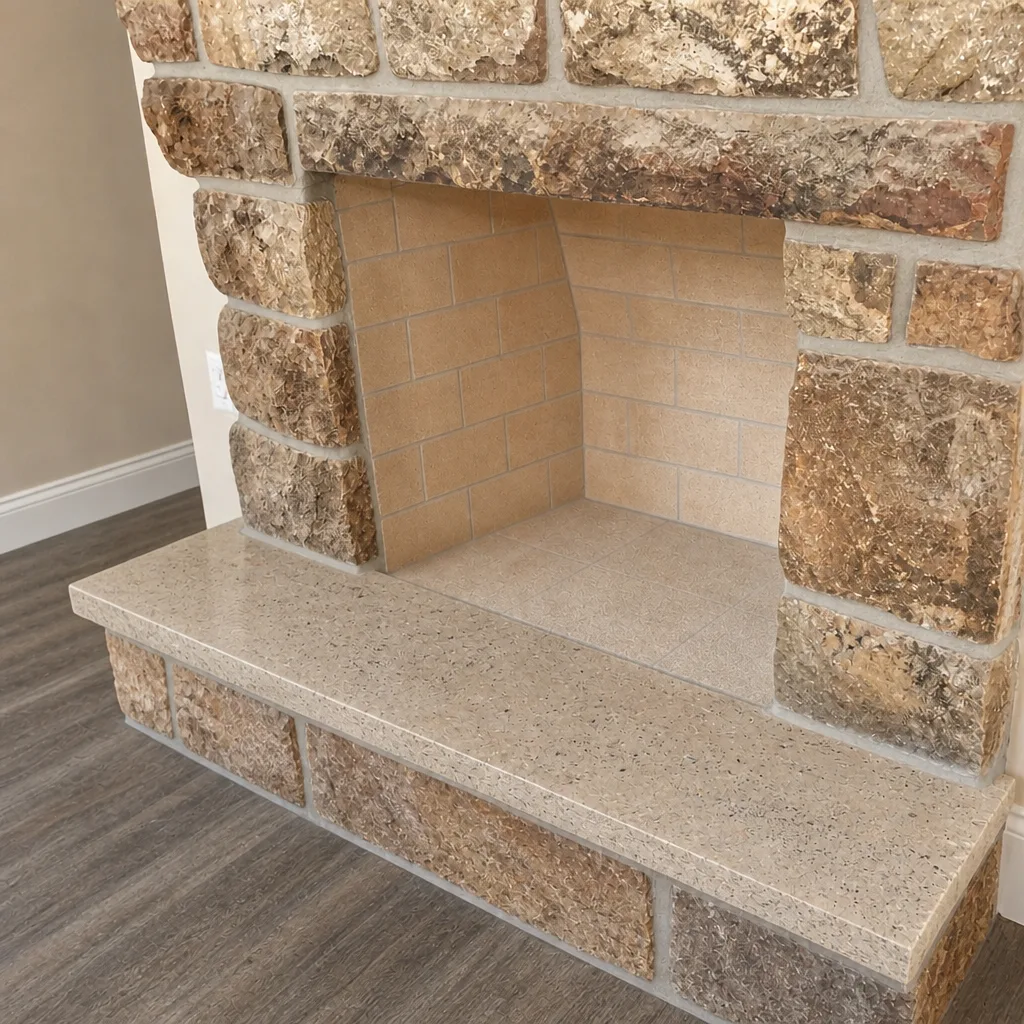
See the difference
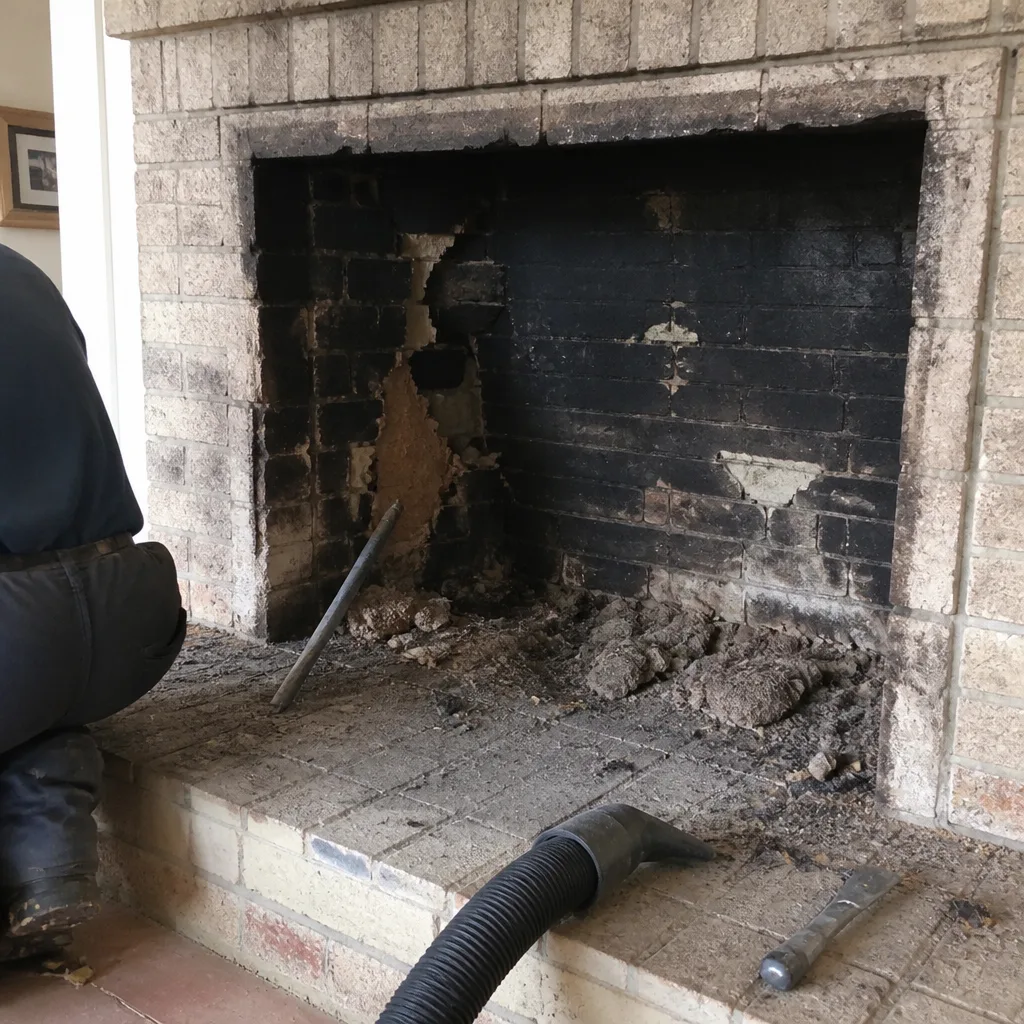 Before
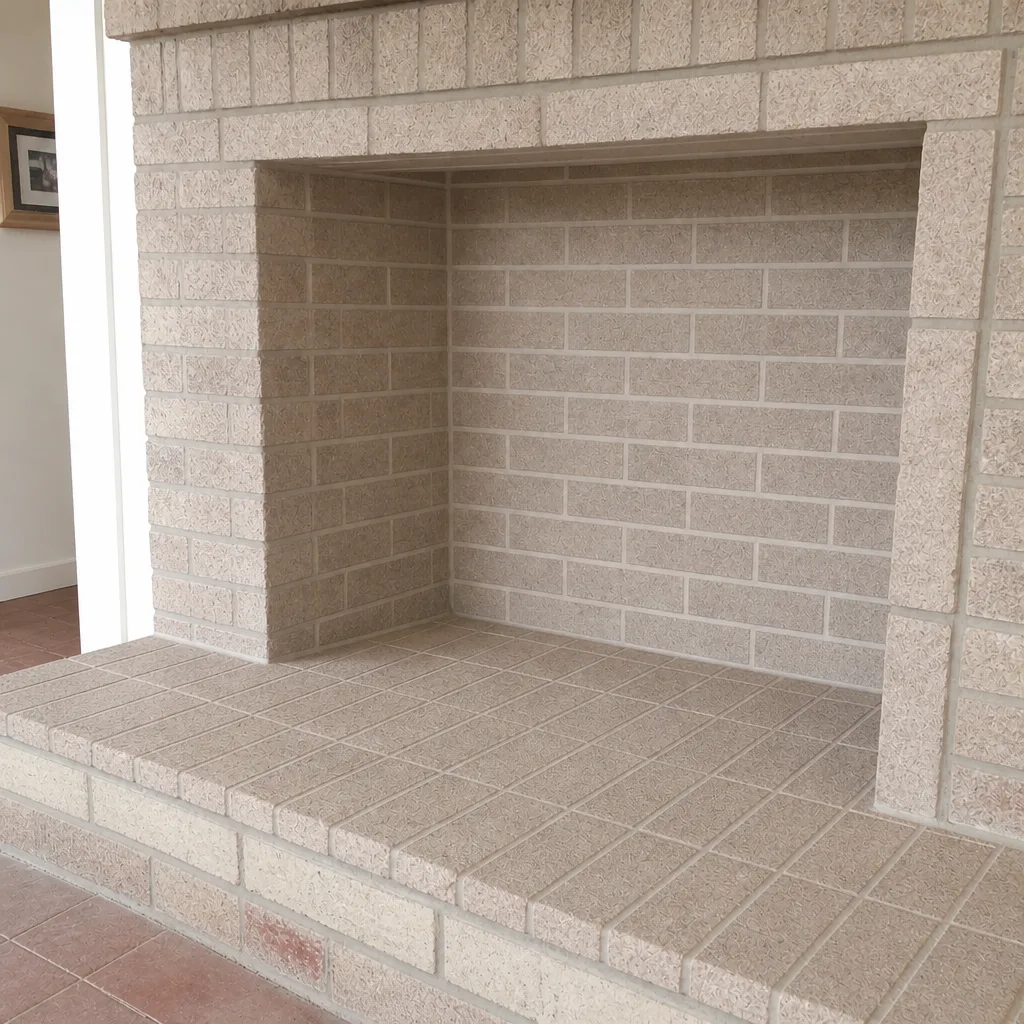 After
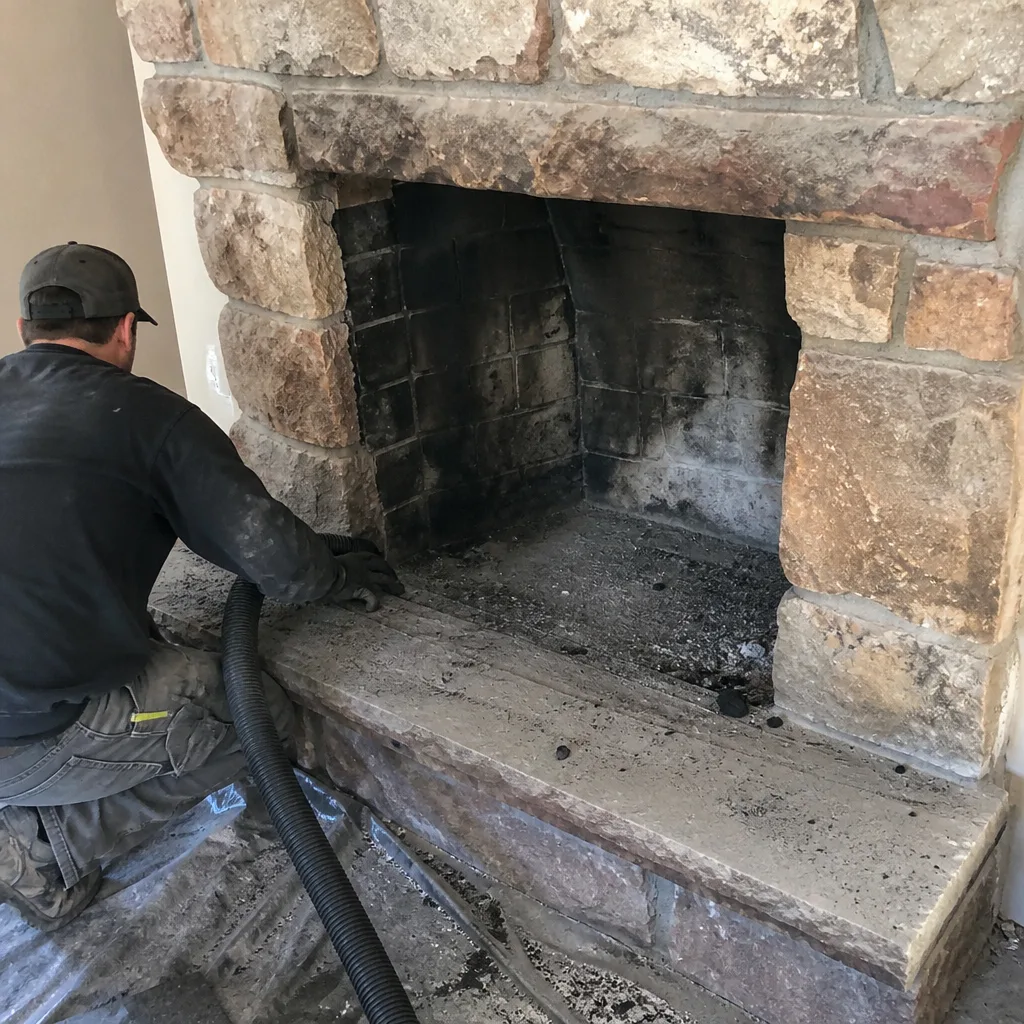 Before
 After
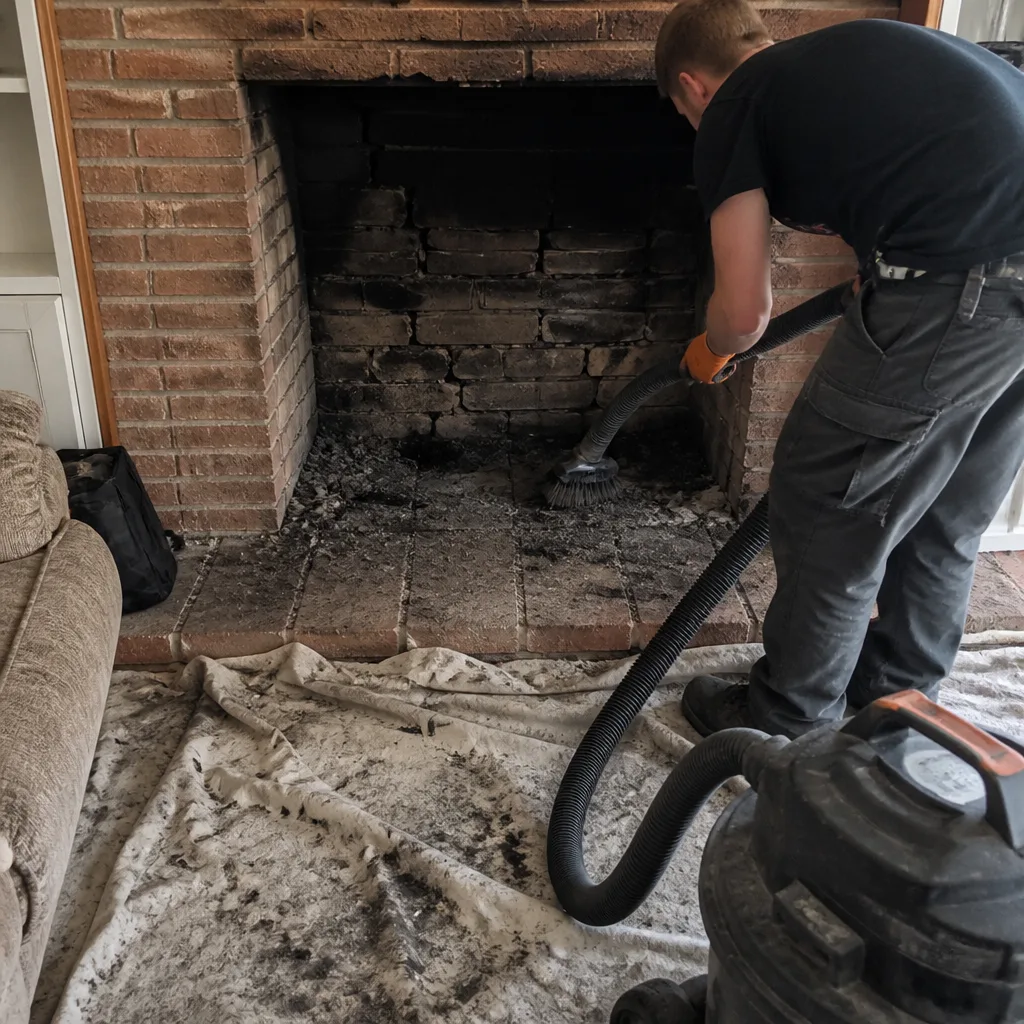 Before
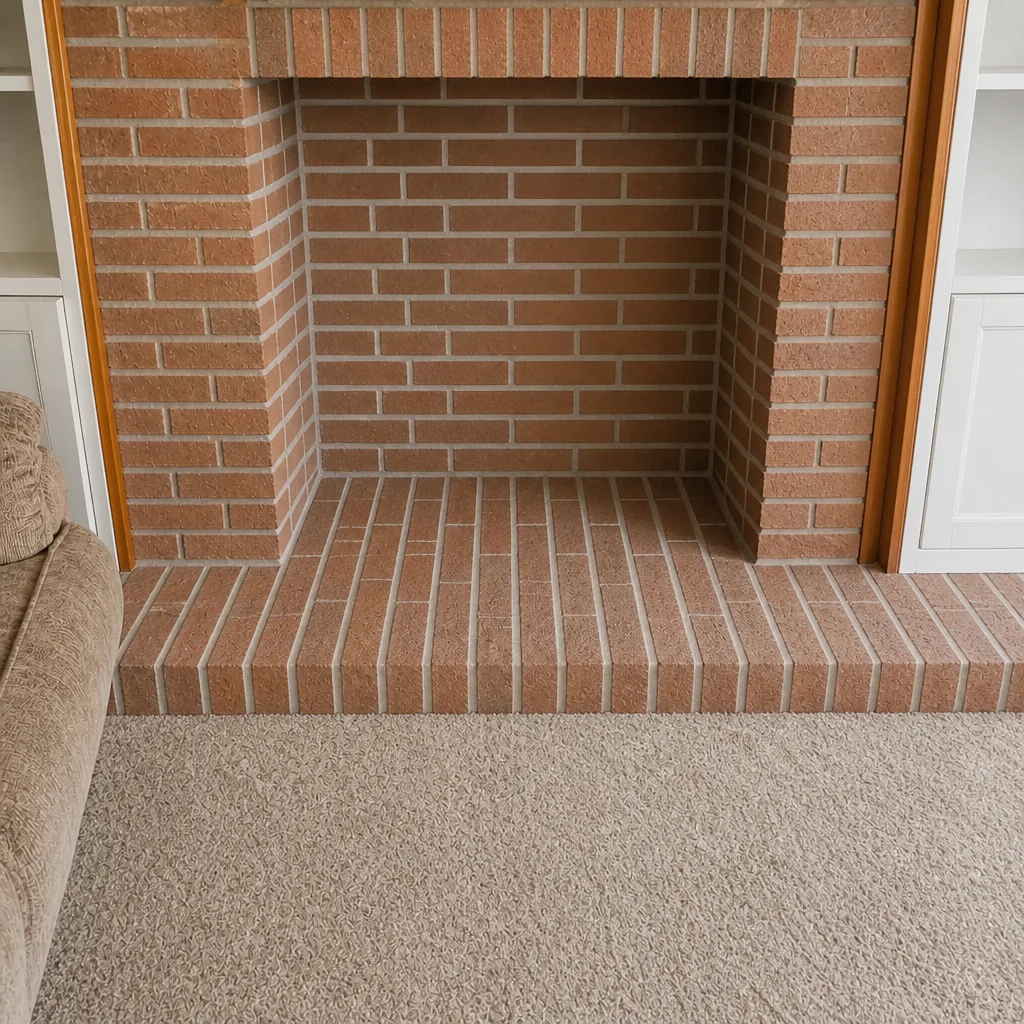 After
Frequently Asked Questions
Most wood-burning chimneys should be swept about once a year, and any time you’ve burned roughly a cord of wood or notice creosote buildup on the flue walls. If your fireplace is used heavily through the winter, book the sweep before the next burning season so the flue is clean when you need it. Call (877) 820-8427 for an exact quote – estimates are free.
The white stain is efflorescence, and it means water has been moving through the masonry long enough to bring dissolved salts to the surface. It isn’t dangerous on its own, but it’s the earliest sign of moisture intrusion and worth inspecting before it progresses to spalling brick or failing mortar. Early attention is what keeps it a stain.
Smoke rollout at ignition usually means the flue isn’t drafting properly, because of a blockage, a pressure imbalance, or a cold flue that needs time to warm. If it happens every time you light a fire, the chimney needs an inspection rather than another workaround. Call (877) 820-8427 to schedule one – the estimate is free.
A sour, smoky smell from an unused fireplace in spring and summer usually means creosote and soot are reacting with humid air, which points to residue the flue is still holding. It’s often a sign the cleaning was missed or delayed. A sweep and inspection will tell you whether it’s a cleaning issue or something more.
A decorative screen or cover doesn’t take the place of a proper cap, because a cover can hide a cracked crown without stopping the water that caused the crack. A real cap fits the flue, lets smoke out, and keeps animals, rain, and debris in check. Call (877) 820-8427 and we’ll assess what your chimney needs; estimates are free.
Creosote keeps accumulating even on a lightly used fireplace, and the thicker deposits get, the harder they are to remove and the more prone to fueling a chimney fire. Meanwhile, uncapped or damaged sections let in water and animals, and small cracks widen through Clearfield’s freeze-thaw winters. A skipped year doesn’t just delay a cleaning; it often adds a repair that a cleaning would have prevented. Call (877) 820-8427 for an exact quote – estimates are free.
The Bottom Line
Chimney problems don’t usually arrive loudly. They show up first as efflorescence, a weak draft, soot on the firebox face, a rattle in the damper, or a smell in July. This guide is written so that you can recognize those signals early, know which ones need attention this week versus next season, and understand what each one means structurally. The safest position for any Clearfield homeowner is being informed before the first cold night, with a documented inspection and a clean flue. If something on this list shows up on your chimney, call us. We’d rather answer a question now than repair a problem later.
Chimney Sweep Clearfield handles cleaning, inspection, chimney repair, fireplace repair, and cap and crown work as one system, with the professional-grade materials and documented assessments that come with specialist work. If you’ve spotted a warning sign, call (877) 820-8427 for a free estimate. We answer 24/7. Fast dispatch from 7am to 7pm, Sunday through Friday.
Written by the team at Chimney Sweep Clearfield.