
Last updated November 24, 2026
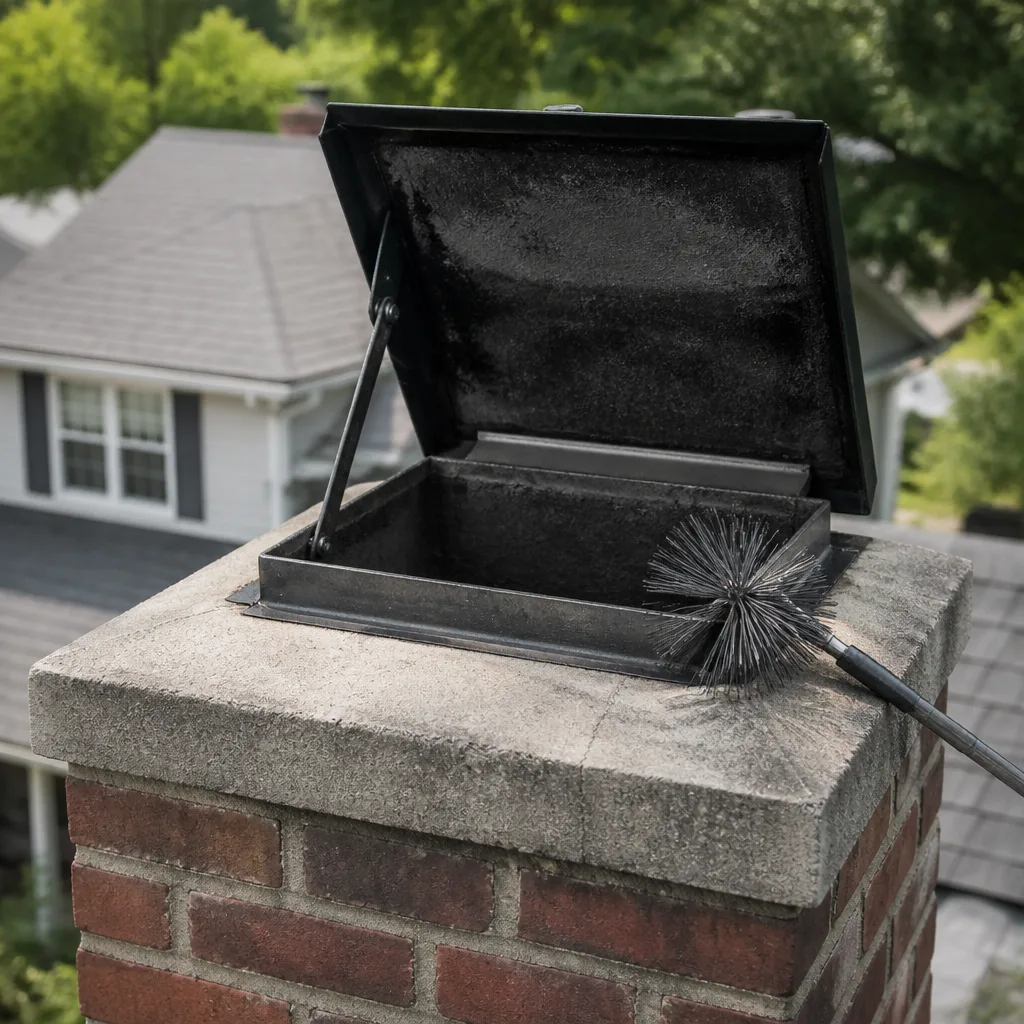 Sweep & inspection
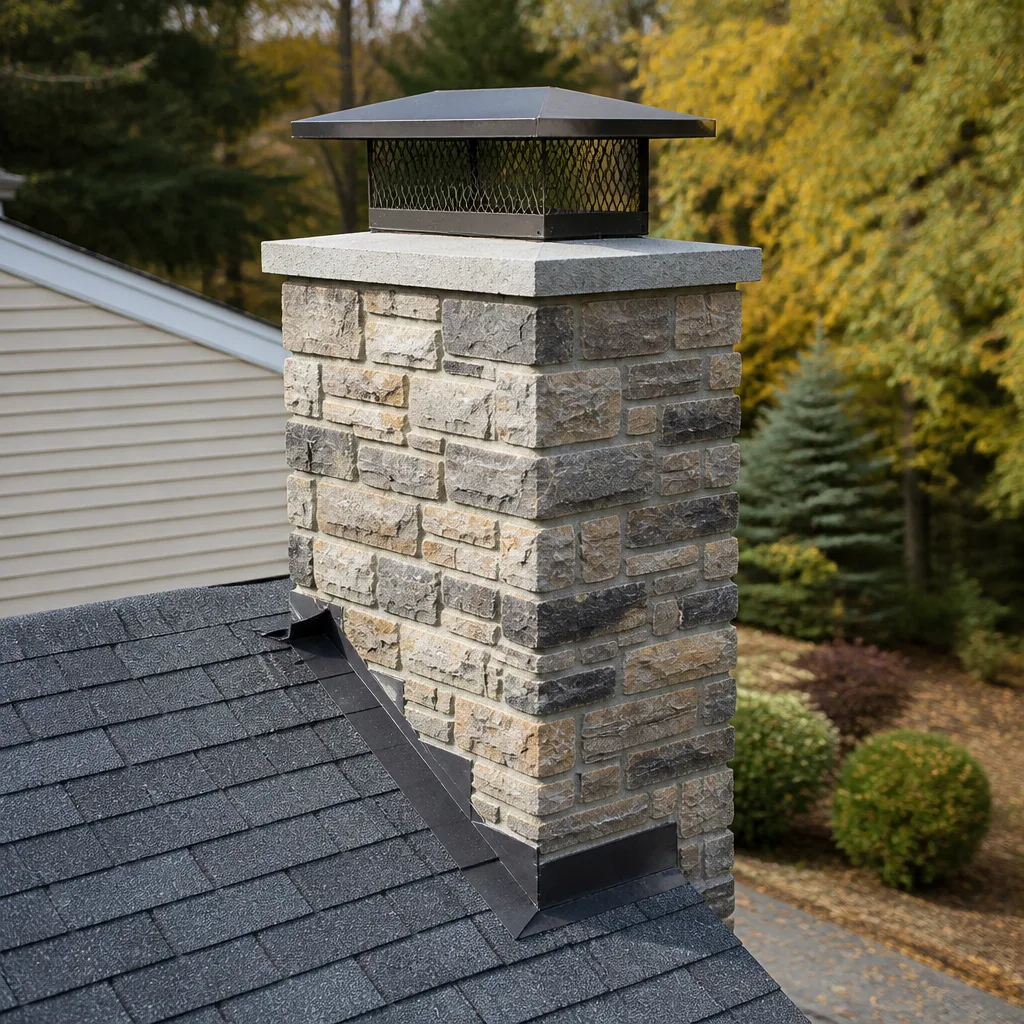 Caps & crowns
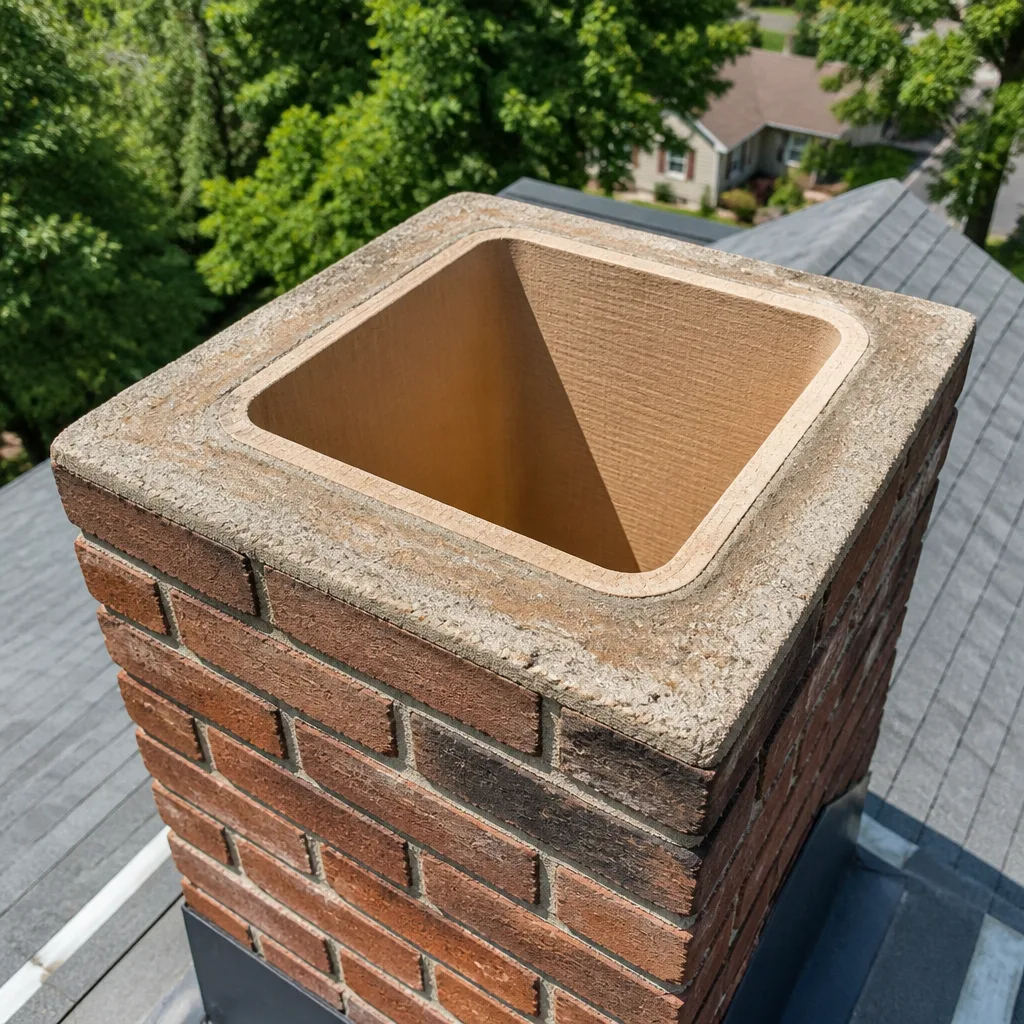 Flue relining
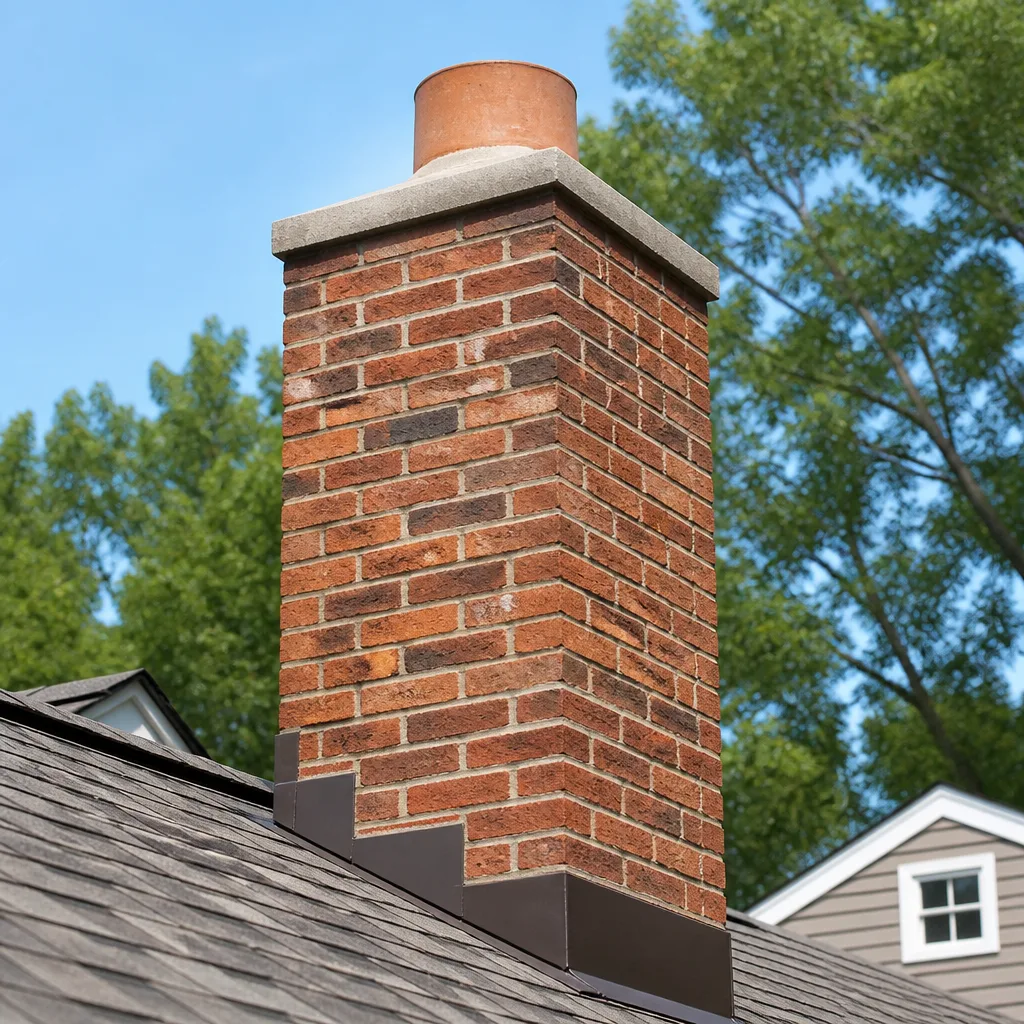 Masonry repair
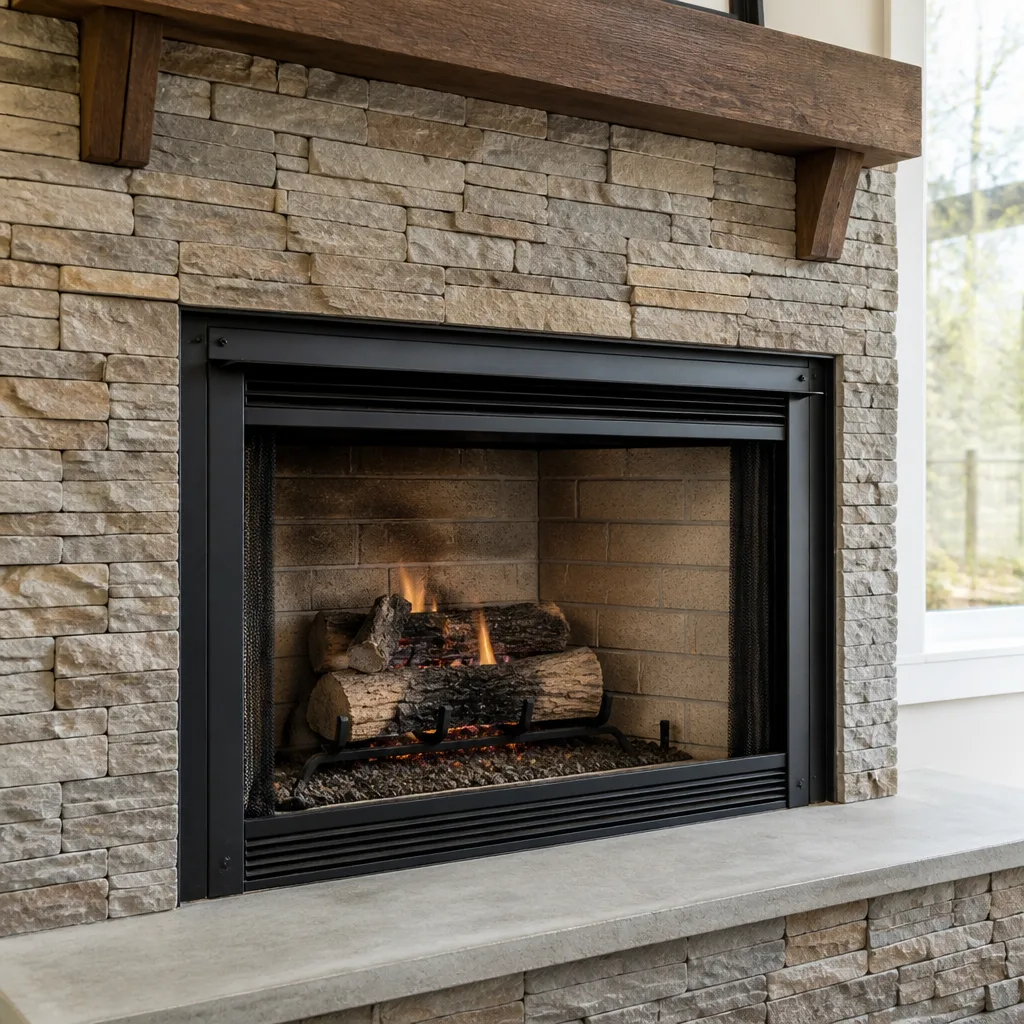 Gas fireplace service
Level 1 sweep and inspection to the NFPA 211 annual standard - flue, crown, cap, and flashing checked and photographed
Chimney sweep logs do not sweep chimneys. They loosen some creosote - which then falls where a brush and vacuum still have to collect it.
Chimney Cleaning Cost Breakdown: The Clearfield Homeowner’s Reference for 2026
A $79 chimney sweep quote and a $299 quote can both be fair prices, or both be ripoffs, depending entirely on what each one includes. Most homeowners can’t tell the difference from the invoice, because a sweep is one of the few home services where the scope of work hides behind a single line item. The cheap quote may cover a brush and a shop vacuum on a flue that needs a camera run to the liner. The expensive quote may include the liner evaluation, a documentation report, and a cap check that the cheap one skips. This guide breaks down what each tier of chimney cleaning in Clearfield actually covers, what the 2026 price ranges look like in the Davis County market, and how to read a quote accurately instead of comparing totals.
Quick Answer
Chimney cleaning in Clearfield in 2026 typically runs $149 to $299 for a basic sweep, $199 to $349 for a sweep bundled with a Level 1 inspection, and $299 to $549 for a sweep plus a Level 2 inspection with camera documentation. The wide range reflects flue height, creosote stage, liner condition, and access difficulty on your particular roof. A written estimate from a trained technician sets the final price for your specific job, and the estimate itself is free.
Styles & brands we work with
- Sweep & inspection
- Caps & crowns
- Flue relining
- Masonry repair
- Gas fireplace service
Table of Contents
- What drives chimney cleaning cost in Clearfield?
- The three service tiers: basic sweep, Level 1, Level 2
- Creosote stages and why they change the price
- Liner material and flue height: the biggest cost variable
- What a legitimate quote should include (and what signal upselling)
- The true cost of a cheap sweep that misses Stage 2 creosote
- Specialist vs. generalist: what the premium actually buys
- Cap and crown work: protecting what we just cleaned
What drives chimney cleaning cost in Clearfield?
Chimney cleaning cost in Clearfield is driven by four things: the condition of your flue, the height and pitch of your roof, whether the quote includes an inspection and camera documentation, and how accessible the firebox and damper are from inside the house. A single-story ranch home with a short flue and a straight run of clay tile is the cheapest scenario. A two-story with a steep pitch, an offset flue, and a wood stove insert is the most expensive.
Most Clearfield homes were built in the mid-to-late twentieth century, and that matters for cost. The older ranch-style homes along the numbered streets west of Main frequently have shorter chimneys with masonry crowns that have weathered decades of northern Utah freeze-thaw cycles. Shorter chimneys are quicker to sweep from the roof but often need crown repair that a quote should flag. Newer two-story homes on the east side of Clearfield near the foothills tend to have taller flues with metal liners, which take longer to sweep but are easier to inspect with a camera run.
The dry, cold winters here also matter. Clearfield sits at roughly 4,300 feet, and the burning season runs long. Most homeowners start fires in October and don’t stop until March or April. That’s five to six months of daily burns for anyone heating primarily with wood, which is more creosote accumulation per season than you’d see in a milder climate. The higher your annual burn hours in Clearfield, the more often you should sweep, and the more likely your quote will land above the basic tier.
The four cost drivers, in order of impact:
- Creosote stage: Stage 1 (soot and light flake) is fastest to clean. Stage 2 (hard, shiny, or tar-like deposits) takes longer and costs more. Stage 3 (glazed, hardened creosote) requires chemical treatment and a return visit in most cases.
- Flue height and liner material: Taller flues and metal liners take more time than short clay runs. Offset flues (a jog in the path) add steps.
- Inspection level: A sweep alone is a cleaning. A sweep plus a Level 1 inspection adds a visual assessment of accessible components. A Level 2 adds camera documentation of the entire flue and is priced accordingly.
- Access: A simple roof access is standard. A steep pitch, a fragile roof covering, or an interior insert that needs partial disassembly adds labor time.
For reference on what a proper sweep looks like when performed correctly, our chimney sweep page walks through the process step by step, including what the technician should be checking before and after the brush run.
The three service tiers: basic sweep, Level 1, Level 2
Chimney work in Clearfield is quoted across three service tiers, and the price gap between them reflects real differences in scope. Understanding what each tier includes is the single most useful thing you can do before comparing quotes.
Tier 1: Basic sweep
Typical Clearfield price range for 2026: $149 to $299.
A basic sweep is a mechanical cleaning of the flue, firebox, and smoke shelf using brushes sized to the flue, followed by a vacuum run with a HEPA filtration unit to contain dust. The technician removes soot, creosote, and any blockage (nesting material, leaves, or fallen flue tile). It does not include an inspection beyond what the technician observes while cleaning. If the technician notices something worth flagging, they should tell you, but a basic sweep doesn’t include a documented assessment.
A basic sweep is a legitimate and appropriate service when you burn occasionally, sweep annually, and have no reason to suspect a problem. It’s not appropriate for a first-time sweep after buying a home, a sweep after a chimney fire, or a sweep on a system you haven’t had serviced in several years.
Tier 2: Sweep plus Level 1 inspection
Typical Clearfield price range for 2026: $199 to $349.
A Level 1 inspection is a visual check of accessible chimney and venting components: the firebox, damper, smoke chamber, flue from below and above, cap, and crown. The technician confirms the system is intact and functioning. This is the appropriate tier for an annual sweep on a system with no known issues. Most Clearfield homeowners burning regularly through the winter land here.
Tier 3: Sweep plus Level 2 inspection with camera documentation
Typical Clearfield price range for 2026: $299 to $549.
A Level 2 inspection adds a camera run through the full flue and a documented photo report. It’s the right call when you’ve moved into a new home, changed fuel type or appliance, survived a chimney fire or a damaging storm, or noticed a change in how the system draws. A camera shows things a visual check cannot: cracks in flue tile, gaps between tiles, damage behind the visible wall of the firebox, and offsets that could trap creosote. This tier is what separates a documented system assessment from a visual once-over. You should walk away with photographs you can keep, and a written summary of what was found.
The gap between Tier 1 and Tier 3 is not a small one. It’s the difference between a cleaning and a documented safety assessment. If a technician offers to skip the Level 2 and “just sweep it,” find out why before agreeing.
Creosote stages and why they change the price
At the core of most chimney cost questions is creosote, and creosote accumulates in three recognizable stages. Each one takes more time and labor to remove than the last, so it’s the largest single driver behind a quote landing at the top of a price range.
- Stage 1: Soot and light flake. Fine, dusty deposits that come off easily with a standard brush. This is the normal result of a well-maintained system with dry, seasoned firewood and good draft. Sweeping is straightforward and lands at the lower end of the range.
- Stage 2: Hard, shiny, or tar-like deposits. Dense creosote that clings to the flue walls and takes longer to remove. It often requires repeated passes with the brush and in some cases chemical treatment to soften the deposits first. Removal takes more time and sometimes a follow-up visit. Stage 2 is what most often takes a quote from Tier 1 pricing to Tier 2 or Tier 3.
- Stage 3: Glazed creosote. A hard, glassy, or tar-like coating that adheres to the flue tile or liner and does not come off with a brush alone. This stage is a fire hazard because it concentrates and burns at high temperature once ignited. Removal usually requires a chemical sweep or a specialized process, and it may reveal liner damage underneath. Never attempt to burn off Stage 3 creosote yourself.
Clearfield’s long burning season accelerates how quickly creosote accumulates. A homeowner who burns dry wood and maintains good draft might reach Stage 1 by spring and stay there. A homeowner who burns unseasoned wood or restricts the air intake to extend burn time can reach Stage 2 within one season. The difference in cost between those two scenarios is the difference between a basic sweep and a sweep-plus-treatment visit.
If a quote comes back unusually high, ask the technician what creosote stage they found and whether the price includes treatment. A Stage 2 quote should be higher than a Stage 1 quote; if it isn’t, find out why. For more on what proper system inspection should look for, see our chimney inspection page on the Chimney Sweep Clearfield homepage.
Liner material and flue height: the biggest cost variable
The condition and type of your chimney liner affect cost in two ways: through the time it takes to clean the liner, and through the price of any repair the inspection reveals.
Clay tile liners are common in Clearfield homes built before the 1980s. They’re durable when intact, but they can crack or shift with freeze-thaw cycling and settling, and a cracked tile lets creosote or combustion gas escape into the surrounding structure. A camera inspection is the only reliable way to confirm whether the tile is intact. Repairing damaged clay tile traditionally meant a full reline job with demolition. HeatShield flue restoration is the alternative we use: it repairs damaged clay tile liners from the inside using a specialized cement compound that reseals joints and smooths the flue surface, without tearing apart your fireplace. That’s an option most chimney companies can’t or don’t provide, and it changes the cost math for older Clearfield homes significantly.
Metal liners, on the other hand, are what newer chimneys, wood stove installations, and gas appliances typically use. When a metal liner is damaged or needs replacement, we work with DuraFlex flexible liner systems: professional-grade stainless systems designed for complex or offset flues that generic hardware-store materials can’t address. DuraFlex flexible liners handle the offset and transition geometries that a rigid liner can’t, which matters on Clearfield homes with chimneys that jog around interior framing.
The brands matter here because they signal whether a company works with trade-level materials or substitutes. We work with the same materials professional chimney installers specify, including Gelco brushes and accessories, Olympia Chimney components, and Famco products, because those are the brands your chimney installer used and the ones we trust to hold up.
Faster cleaning is not the same as a cheaper job. A taller flue with an offset can double the time a sweep takes. A clay tile liner with a damaged joint may add a restoration line item. Both are legitimate costs, not upsells, and both should appear as separate items on a quote. For more on what repair work actually involves, see our chimney repair service page.
What a legitimate quote should include (and what signals upselling)
A legitimate chimney quote in Clearfield is itemized, written, and explains what each line item covers. A quote that comes as a single lump sum with no breakdown is not useful for comparison and should be treated with caution. Here’s what a proper quote looks like in practice.
A legitimate quote should include:
- A written scope of work: what the technician will clean (flue, firebox, smoke chamber, damper), and what they will inspect.
- The inspection level: Level 1, Level 2 with camera documentation, or basic sweep with no formal inspection. The quote should say which one, clearly.
- Creosote stage found on visual assessment: Stage 1, 2, or 3, and whether treatment is included or quoted separately.
- Liner condition: whether the liner is clay tile, metal, or something else, and whether a camera run is included.
- Cap and crown assessment: whether the cap and crown are intact, and whether repair is included in the quoted price or quoted separately.
- A written estimate that sets the final price: not a verbal number. The written estimate is the binding document.
- What happens if the technician finds something the quote didn’t anticipate: do they stop and re-quote, or proceed at the stated price?
Charges that signal upselling:
- A “diagnostic fee” or “inspection fee” separate from the estimate, on a system that’s already going to be inspected as part of the sweep.
- Liner replacement quoted before any camera documentation is provided.
- Cap or crown repair quoted as essential when the assessment found the components intact.
- Cleaning “both the flue and the chimney structure” broken into separately priced items that overlap.
- Any charge for the written estimate itself. Our estimates are free, and you should expect the same of any legitimate quote.
Nothing should be recommended without camera evidence you can see for yourself. If a technician tells you the liner needs replacing, they should show you the photograph. If they can’t, the recommendation should wait.
The true cost of a cheap sweep that misses Stage 2 creosote
A cheap sweep is expensive when it misses something. The math is not complicated, and it plays out in Clearfield homes more often than most homeowners realize.
Suppose you book a $149 basic sweep. The technician runs a brush, vacuums the firebox, and moves on. If the flue has Stage 2 creosote, a brush pass alone may remove the surface layer without addressing the hard, tar-like deposit beneath. The technician leaves without documenting it, and the next season you burn on top of an accumulating creosote layer. When you finally do get a proper sweep – or when you notice a draft problem or a chimney fire behavior you can’t explain – the flue now needs chemical treatment, multiple passes, possibly a follow-up visit, and a camera run to confirm the tile isn’t damaged. The two-visit cost at that point easily exceeds what a Tier 2 or Tier 3 sweep would have cost in the first place.
The real cost of a “cheap” sweep, then, is not the invoice you paid. It’s the cost of the missed evaluation, plus the escalation in cleaning time next season, plus – in the worst case – the cost of structural repair if creosote reaches Stage 3 and ignites.
There’s also a safety dimension that doesn’t show up on any invoice. A chimney that isn’t properly cleaned and inspected is a carbon monoxide risk as well as a fire risk. Combustion gases that should vent out the flue can back up into the home if the flue is blocked or the liner is compromised. The CDC and CPSC recommend every home with a fuel-burning appliance have a carbon monoxide alarm on every level, and a functioning alarm plus a proper annual inspection is the combination that actually protects a household.
We’re not telling you to avoid every quote below $299. Many Clearfield homeowners legitimately land at the lower end of the range with a clean flue, dry wood, and a well-maintained system. What we’re telling you is to make sure the cheap quote covers the inspection and documentation you actually need, or to expect the missed cost next season.
Specialist vs. generalist: what the premium actually buys
Chimney specialists quote higher than generalist handymen and general contractors in Utah, and homeowners often assume the difference is marketing markup. In most cases it isn’t. The premium buys three things a generalist typically can’t provide.
- Camera inspection with documentation. A camera run through the flue isn’t just an extra service. It’s the evidence base for every recommendation that follows. Generalists frequently offer a “visual inspection” that doesn’t see the flue interior above the smoke chamber. Specialists document the entire flue with images you can keep.
- Industry-grade materials and brand knowledge. A generalist typically sources liner and cap materials from a hardware store or a regional distributor. A specialist works with the brands trade installers specify – DuraFlex for flexible liner systems, HeatShield for non-demolition flue restoration, Gelco and Olympia Chimney for brushes, accessories, and components, Famco for chimney products – because those are the materials designed for the conditions your chimney actually sees. If your chimney installer used those brands, the specialist knows how they fail and how to repair them.
- Specialist repair capability. HeatShield flue restoration is a specialist service. A generalist can’t offer it because it requires specific training and material access. When a generalist encounters damaged clay tile, they have one option: recommend a full reline with demolition. A specialist can offer restoration, which is faster, less invasive, and in many cases less expensive.
The full-service scope also matters. A chimney specialist handles sweep, inspection, cap, crown, fireplace repair, and chimney repair as one system, which means the person evaluating the system is the same person responsible for the repair. A generalist who subcontracts the repair out is not responsible for the outcome the same way. For more on what our fireplace repair service covers, that page walks through the firebox and damper work that often accompanies a sweep on an older Clearfield home.
The premium, in short, buys documented evidence, professional materials, and a single point of responsibility for the whole chimney system. When a quote difference looks large, ask what inspection and documentation the cheaper quote includes. The gap usually narrows fast.
Cap and crown work: protecting what we just cleaned
A cap and crown check should be part of every Tier 2 and Tier 3 quote. It’s not an upsell. It’s what keeps tomorrow’s rain from undoing today’s work.
The chimney crown is the concrete or masonry cap at the top of the chimney that sheds water away from the flue. When the crown cracks, water runs down the flue, saturates the masonry, and in Clearfield’s freeze-thaw cycles, that water expands, cracks more, and accelerates spalling. A crown that looks fine in the summer can be failing by the following spring. The cap is the metal or masonry structure over the flue opening that keeps rain, snow, and animals out. A cap that’s missing or damaged lets nesting material and moisture straight into the flue.
Both components are inspectable during a routine sweep, and both should be repaired when the assessment shows they’re failing. A small crown crack repaired now costs a fraction of the masonry repair that a full crown failure eventually requires. We work with famco caps and crown materials for the same reason we work with DuraFlex and Olympia Chimney components: they’re the products designed for the climate and conditions your chimney actually faces.
If you’re comparing quotes and one includes crown repair and the other doesn’t, the difference may be legitimate. The cheaper quote may simply not have inspected the crown. Ask the technician to confirm before you decide which is the better value.
Common Mistakes to Avoid
- Choosing on price alone. A quote is a scope document, not a number. Comparing totals without reading what each quote covers is the single most common mistake we see in Clearfield. Ask for an itemized written estimate before you decide.
- Skipping the camera inspection on a home you just bought. A Level 2 inspection with camera documentation is the appropriate first sweep on any Clearfield home that’s changed hands. You don’t know the history of the flue, and a visual check from below can’t see the tile above the smoke chamber.
- Burning unseasoned wood to save money. Wet or green wood generates far more creosote per cord, which escalates the cleaning cost the following season and increases the fire risk. Seasoned, dry wood reduces both the creosote stage and the annual cost.
- Ignoring the crown until it fails. A small crown crack repaired during a routine sweep costs far less than the masonry repair a full crown failure requires. Northern Utah’s freeze-thaw cycles punish delayed crown maintenance.
- Accepting a liner replacement quote without camera photos. If the technician recommends a new liner, ask to see the photograph of the damage. Any legitimate recommendation should come with evidence you can look at yourself.
- Assuming a generalist quote includes the same scope as a specialist quote. They usually don’t. A generalist quote often excludes the camera inspection, the liner assessment, and the crown check that a specialist quote includes.
- Skipping the sweep in a mild winter. Clearfield winters are long but variable, and a homeowner who skipped the sweep one season can find Stage 2 creosote building if they burn more than usual the next. The annual sweep is a maintenance schedule, not a seasonal response.
See the difference
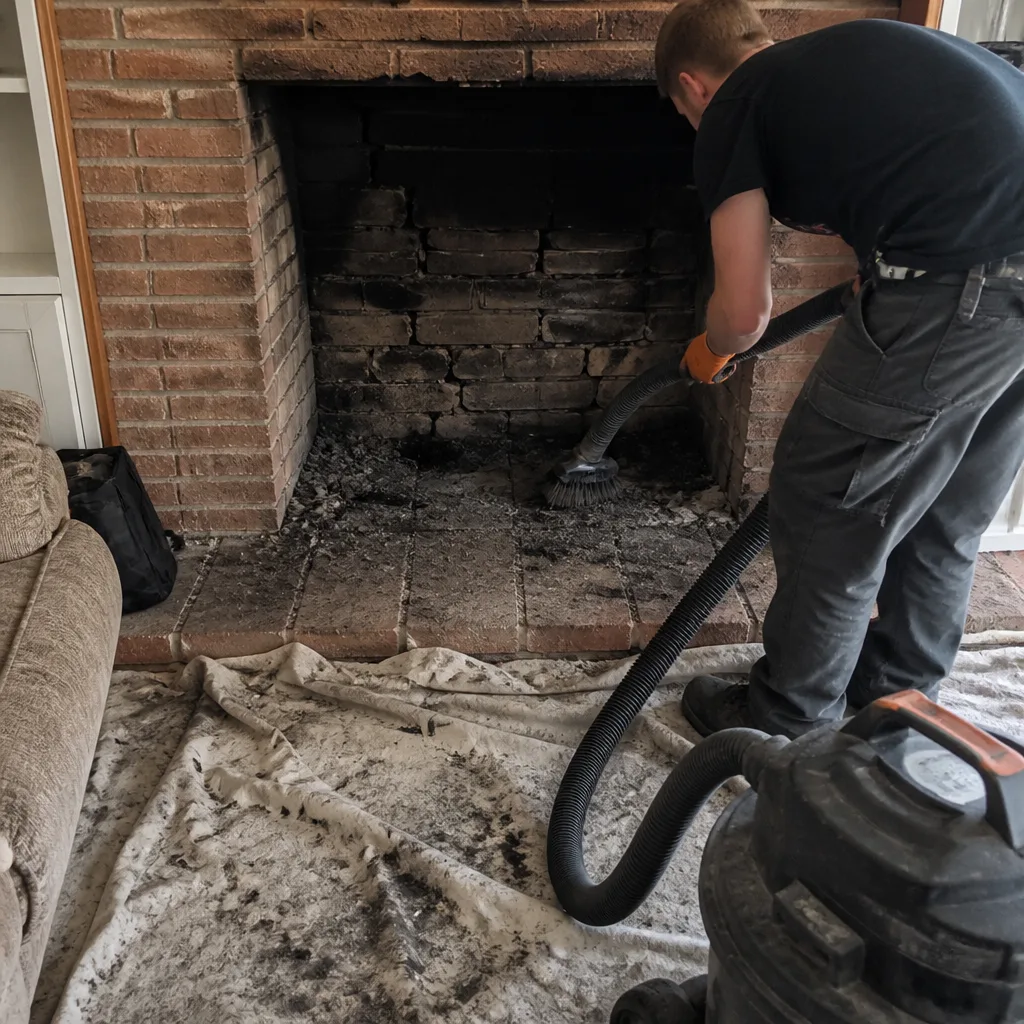
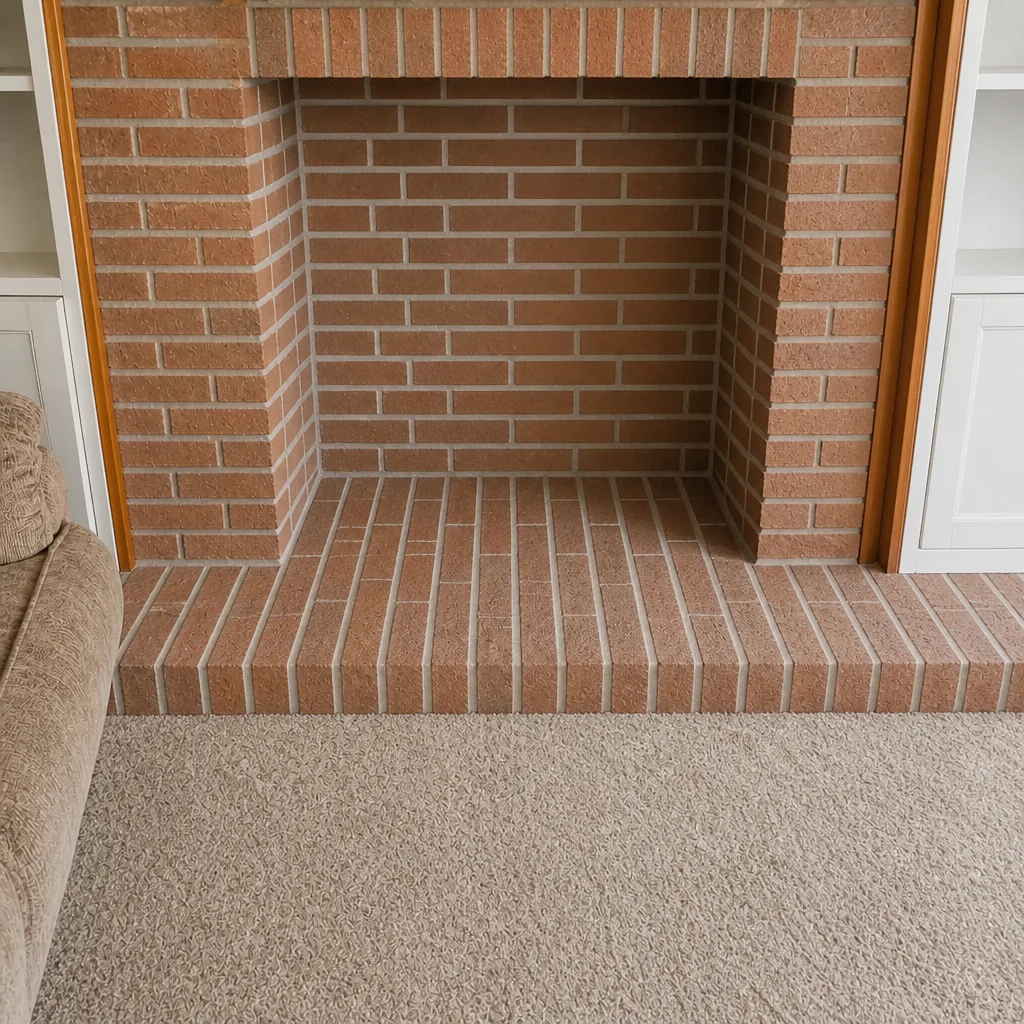
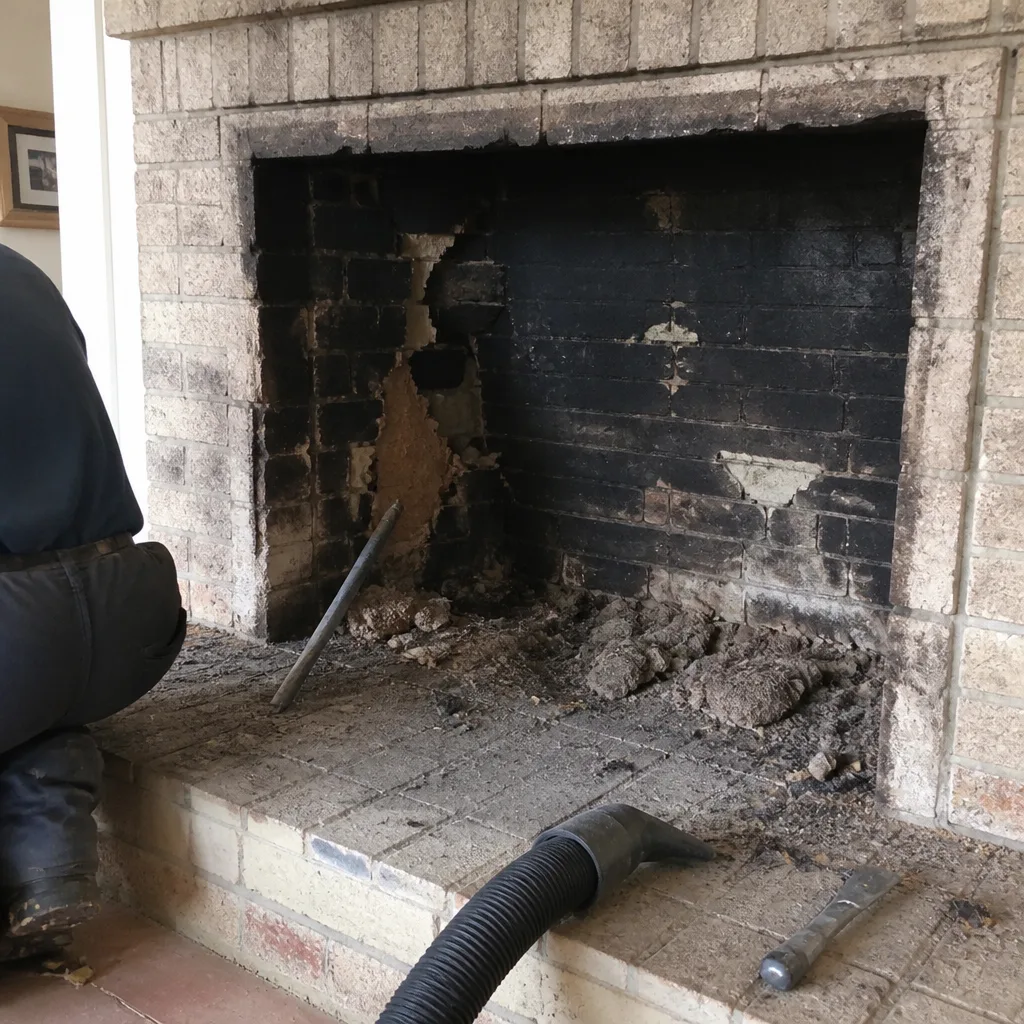 Before
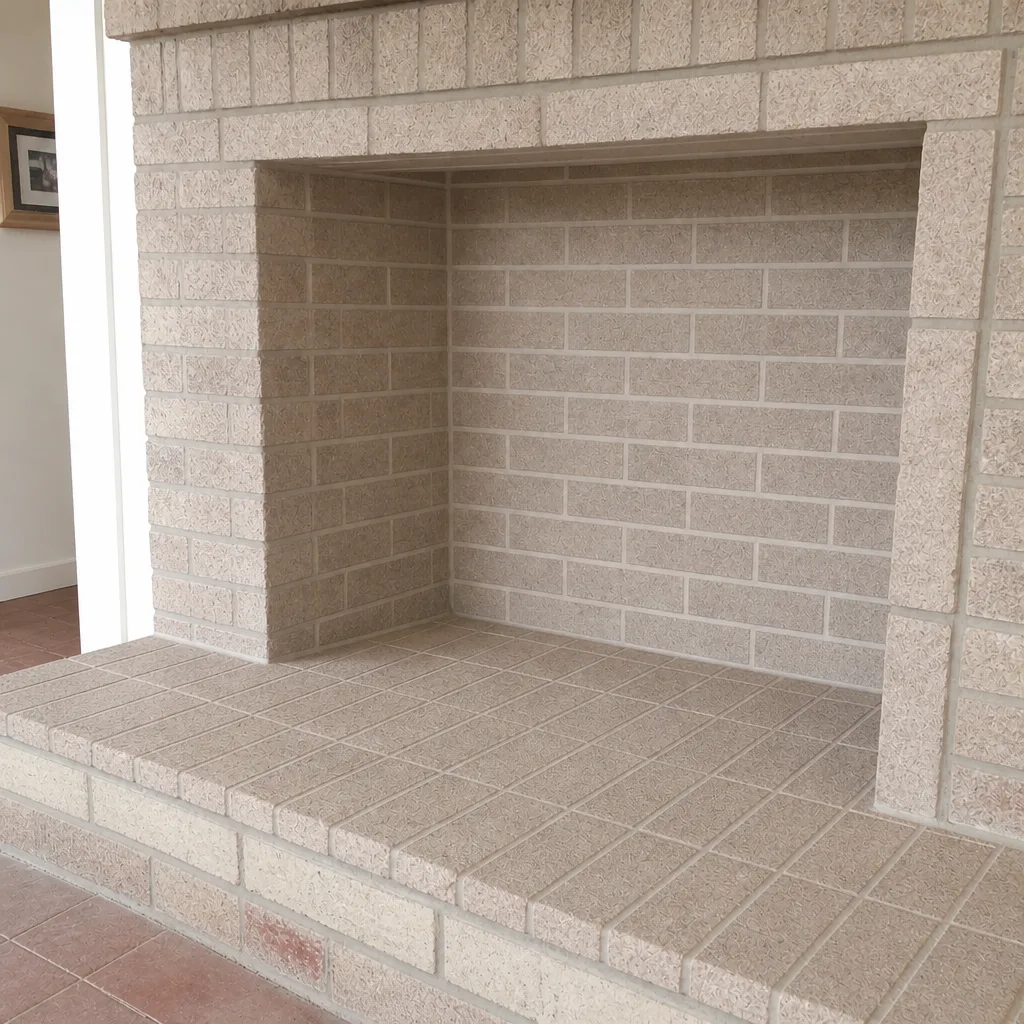 After
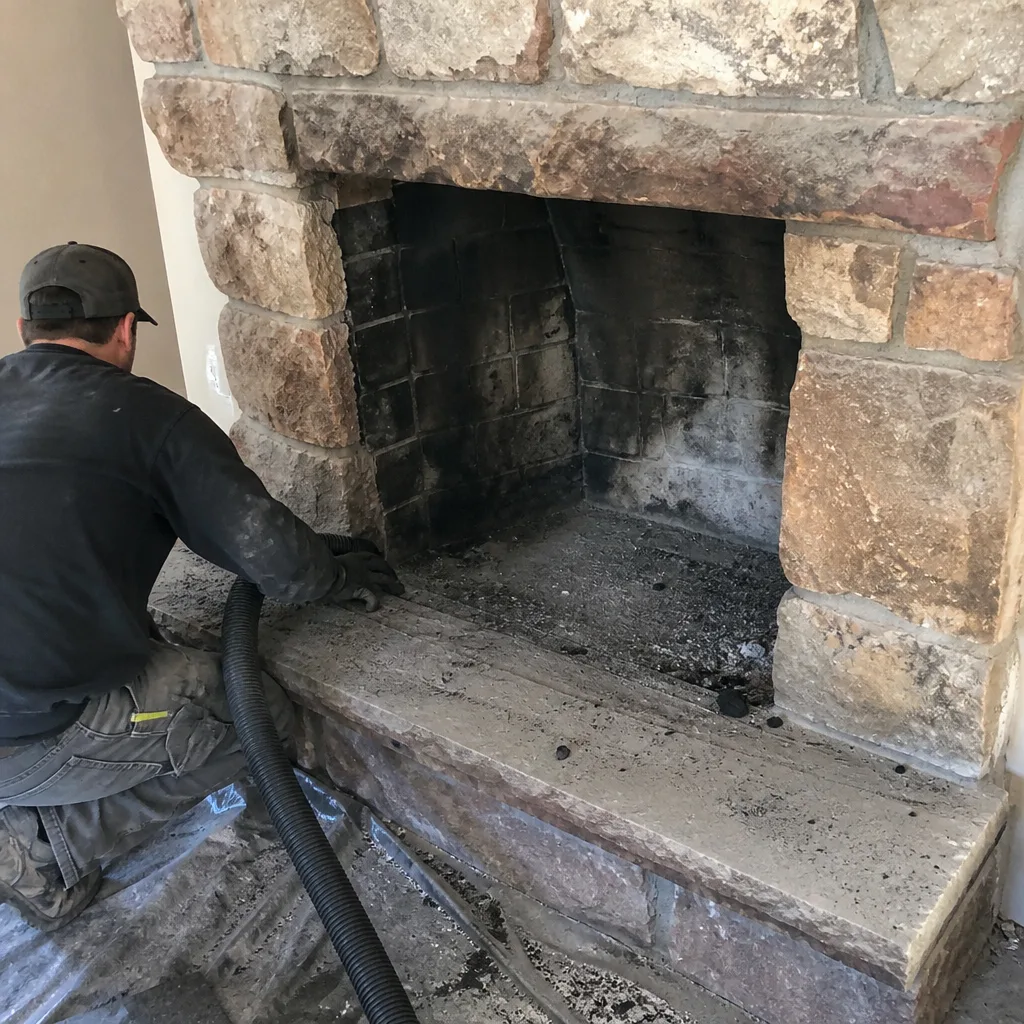 Before
 After
 Before
 After
When to Call a Professional
Call a professional chimney technician in Clearfield when any of these situations applies to your home.
You’ve just moved into a Clearfield home and don’t know the service history of the chimney. You’ve burned wood for a full season and haven’t had the flue swept. You’ve had a chimney fire, or you’ve noticed a sudden change in how the fireplace draws. You smell smoke in the house when the fireplace is in use, or your carbon monoxide alarm has triggered. You see creosote buildup on the flue walls that has a shiny or glazed appearance. You notice the cap is missing, damaged, or loose. Your chimney crown is cracked or spalling. You’ve changed fuel type or added a new appliance (gas, wood stove, pellet insert) and need the system assessed for compatibility.
Some of these are urgent. A carbon monoxide alarm going off is an immediate safety call – get everyone out of the house, ventilate, and call. Others are maintenance calls that can be scheduled. Either way, the right next step is a documented inspection with camera evidence, not a visual check or a phone call guess. Chimney Sweep Clearfield offers free estimates in Clearfield – call (877) 820-8427. We answer 24/7. Fast dispatch from 7am to 7pm, Sunday through Friday.
Frequently Asked Questions
Chimney sweeping in Clearfield in 2026 typically costs $149 to $299 for a basic sweep, $199 to $349 for a sweep with a Level 1 inspection, and $299 to $549 for a sweep with a Level 2 camera inspection. The range reflects flue height, liner type, creosote stage, and access difficulty on your particular roof. Call (877) 820-8427 for an exact quote – estimates are free.
Not always. A liner replacement should only be recommended when camera inspection shows damage the liner can’t be restored from. In many Clearfield homes with damaged clay tile, HeatShield flue restoration – which reseals and smooths the flue from the inside – can solve the problem without a full replacement. Ask to see the camera photographs before you agree to anything.
Most Clearfield homeowners should sweep once a year, at the end of the burning season. If you heat primarily with wood through the long northern Utah winter, you may need to sweep more than once a year depending on how much you burn and the quality of your fuel. A technician should recommend the interval based on what the flue actually shows after a season of use.
Creosote accumulates in the flue and can reach Stage 2 (hard, tar-like) or Stage 3 (glazed) deposits that become progressively harder to remove and increase the risk of a chimney fire. The cost of cleaning a Stage 3 flue is often two to three times the cost of a routine sweep. Skipping the sweep doesn’t eliminate the work – it defers it at a higher price and higher risk.
A $79 quote is not automatically a problem, but it usually means a basic sweep without an inspection, camera documentation, or a crown and cap check. If your Clearfield home fits the scenario for a basic sweep – you’re already maintaining a clean system and only need the routine cleaning – it can be fair. If you don’t know the history of your system, ask what the $79 includes before agreeing. Call (877) 820-8427 to compare against a documented estimate.
The two quotes usually cover different work. A specialist quote typically includes camera inspection, liner assessment, crown and cap check, and a written report. A generalist quote frequently covers only the sweep. Ask each company what their quote includes in writing before comparing totals. The gap is almost always explainable by scope, not by price.
The Bottom Line
A chimney sweep is not a single service with a single price. It’s a scope of work that varies from a $149 basic sweep to a $549 documented Level 2 inspection with camera evidence, and the difference between them is what actually protects your Clearfield home. Compare quotes by what they cover, not by the total at the bottom. Insist on a written estimate that itemizes the inspection level, the creosote stage found, the liner condition, and the crown and cap assessment. Treat any recommendation without camera documentation as something to schedule later, not something to agree to on the spot. If you’re ready to find out what your actual chimney needs, call for a free estimate. Our technicians have up to 9 years of experience with the same professional brands your chimney installer used, and our written estimate sets the final price every time.
Chimney Sweep Clearfield
Call (877) 820-8427. We answer 24/7. Fast dispatch from 7am to 7pm, Sunday through Friday. Closed Saturday. Estimates are free.
Written by the team at Chimney Sweep Clearfield.